Introduction
Once you visit Ha Giang, you cannot miss the Dong Van Karst Plateau Geopark, known as the “Gray Kingdom” of rocks and wind. A rough but wonderful picture that Mother Nature has bestowed on the Ha Giang land. On October 3, 2010, the profile “Dong Van Karst Plateau Geopark” was officially recognized as a Global Geopark by the UNESCO Global Geoparks Network (GGN) Advisory Council. At that time, this was the only title in Vietnam and the second in Southeast Asia.
The Dong Van Karst Plateau UNESCO Global Geopark attracts a large number of domestic and international tourists to marvel at its natural beauty. With its majestic landscapes of limestone mountains, deep valleys, and rustic villages, this place not only boasts wild beauty but also possesses special geological, cultural, and historical significance. Let’s find out all the information about Dong Van with Ha Giang Private Car.
Dong Van Karst Plateau Global Geopark Overview Information
Geography Information
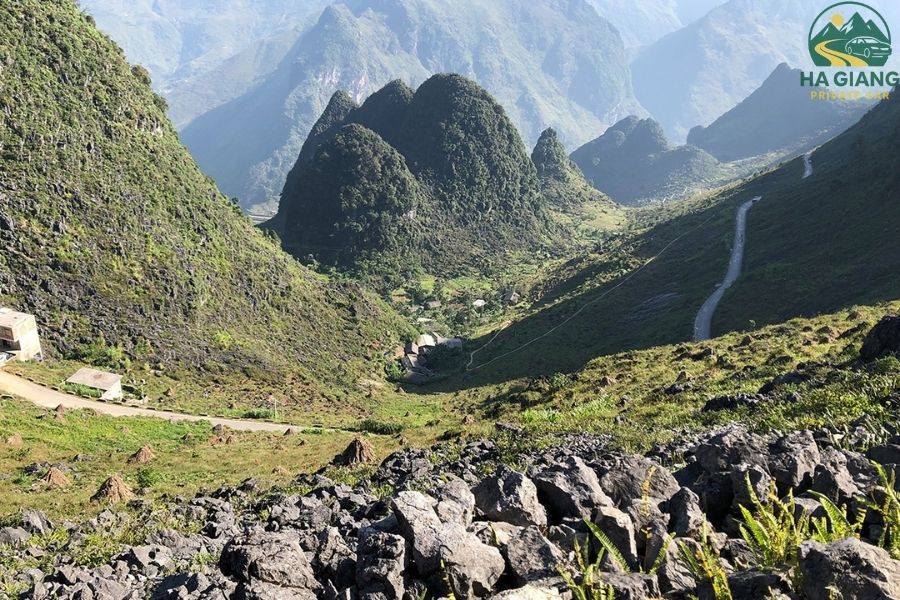
The Dong Van Karst Plateau Global Geopark is situated in the northernmost mountainous region of Vietnam, covering an area of 2,265.7 km² and boasting an average altitude of approximately 1,200-1,400 m. Dong Van Karst Plateau is a rocky plateau stretching across many communes of Ha Giang, including Tung Vai, Nghia Thuan, Quan Ba, Can Ty, Bach Dich, Thang Mo, Lung Tam, Yen Minh, Pho Bang, Sa Phin, Lung Phin, Mau Due, Duong Thuong, Du Gia, Lung Cu, Dong Van, Sung Mang, Tat Nga, Ngoc Long, Meo Vac, Khau Vai, Niem Son, and Son Vi.
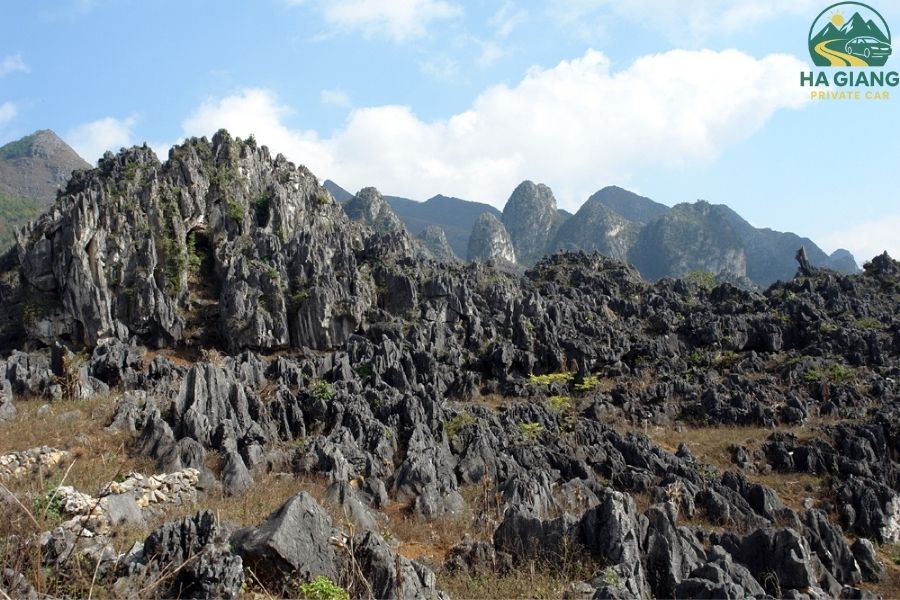
Approximately 80% of the plateau’s area consists of exposed limestone outcrops. These outcrops are living proof of the geological evolution and transformation that have occurred over hundreds of millions of years. Inside those rocks, there are many precious fossils. Many fossil specimens of species have been found that are approximately 700 – 900 million years old.
Dong Van Plateau is a rocky area of different ages, ranging from Devonian to Permian, surrounded by earthy mountains. All combined to create a beautiful picture that cannot be found anywhere else on earth.
Population Information
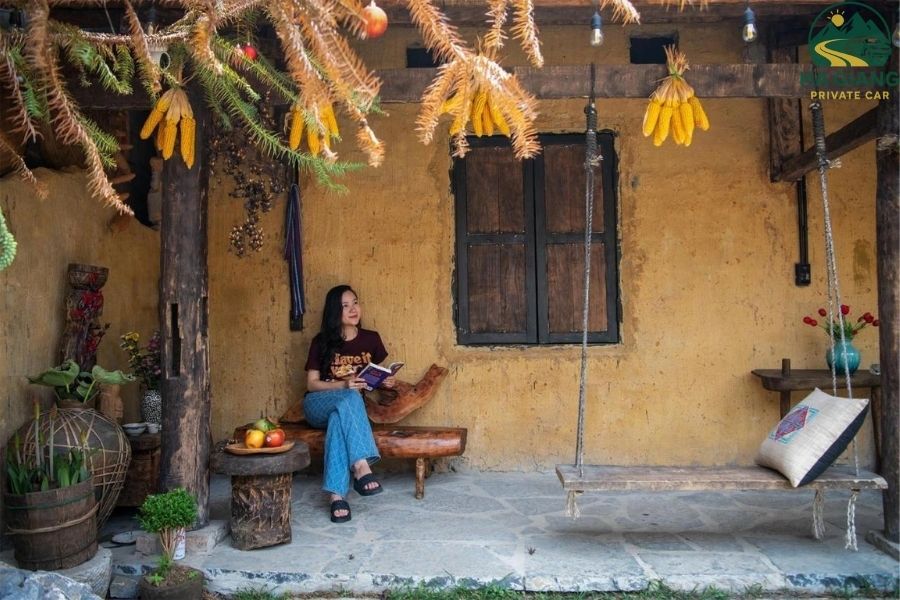
The Dong Van Karst Plateau area is currently home to approximately 360,000 people. The people here belong to 19 different ethnic minorities of Vietnam. In addition to the H’Mong, Dao, Tay, and Nung, there are also ethnic groups such as La Chi, Pu Péo, Pa Then, and Lo Lo, the only ones living in this area.
Thanks to the diversity of ethnic minorities living here, cultural diversity has been formed. Not only a masterpiece of nature, but the Dong Van Karst Plateau Geopark is also a cultural intersection, a place to preserve the customs and lives of many ethnic minorities.
How To Get To The Dong Van Karst Plateau?
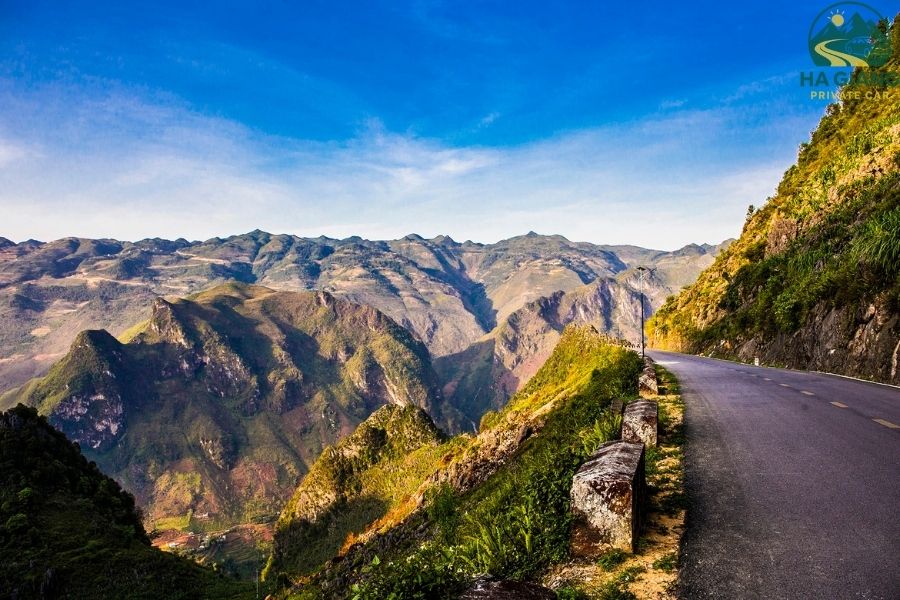
From the center of Ha Giang City to the Dong Van Cat Ear Rock area, the distance is approximately 130 km. If you travel by motorbike, it will take you approximately 3-4 hours through winding mountain passes, cliffs, and lush terraced fields.
The advice for tourists from afar is to take a car to Ha Giang, rest for a night, and then rent a motorbike to start the journey. The most beautiful and fastest route is to travel along National Highway 4C. This is a legendary route that connects the majestic beauty of the region with its wildness, characterized by the gray rock formations.
What To Expect At Dong Van Karst Plateau Geopark?
Hearing the words “Karst Plateau”, you probably immediately think of dry, gray, and monotonous mountain ranges. But Dong Van is different. When you carry your suitcase and pass the steep curves between the clouds, you will be surprised to see this place radiant with flower valleys. In addition, there is also the color of sunlight on the yin-yang tiled roofs and the stone paths leading up to the cornfields.
The Art of The Karst Plateau Geopark
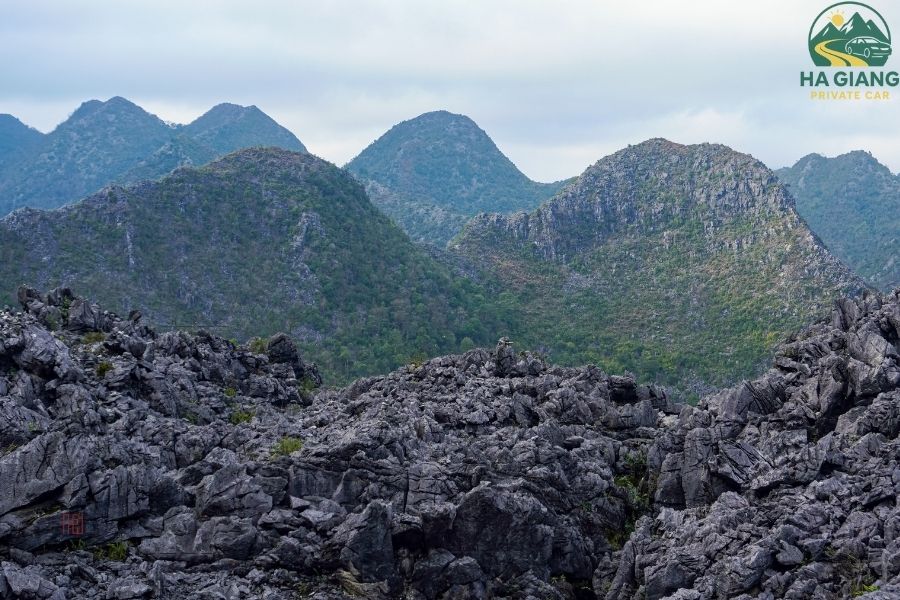
Most of the stone plateau lies within the Dong Van district. Here, rocks and sky blend to form a majestic gray-green picture. When traveling to Ha Giang and to the stone plateau, from a high peak, looking far away, you will see layers of mountains undulating like waves, intertwined like folds of time.
The rocks stand in layers like natural walls surrounding the small houses nestled in the vastness of the sky and earth. Visitors coming here will see how small humans are compared to the majesty of nature.
In the middle of a seemingly barren land, people still cling on. Every small piece of land is fully utilized to grow corn and vegetables. The hands of men here, with traditional techniques, turn each stone slab into a solid fence. The stone here is not only a mountain, but also a home, a belief in living in the wilderness.
Colorful Flower Fields When in Season
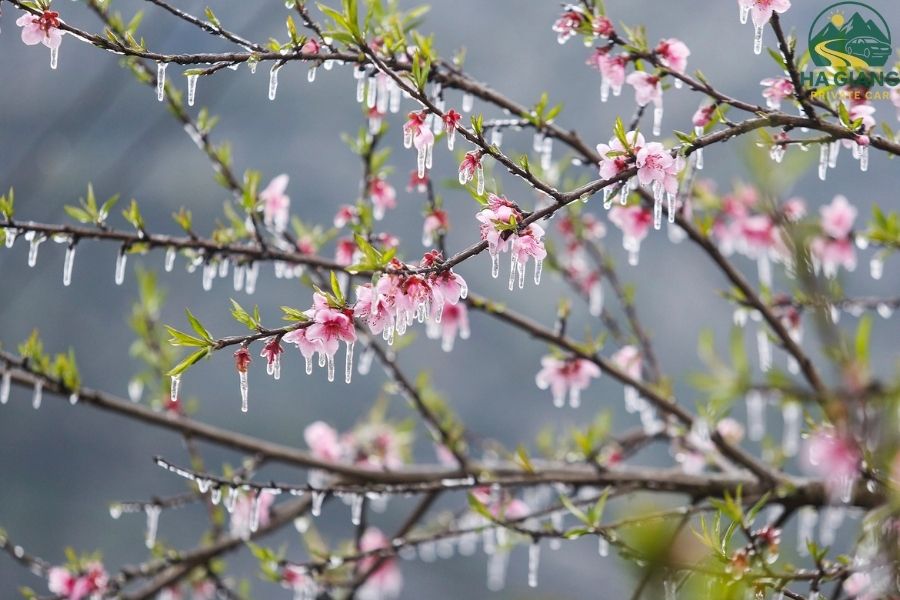
Each passing season, the Dong Van Karst Plateau dons a different colored coat. Amidst the rugged and arid gray background of karst rock, flowers still bloom, soft but no less proud.
In January or February, it will be the season of snow-white plum blossoms, blooming all over the plateau. Additionally, yellow rapeseed flowers will creep into every crevice of the rocks, touching the gentle sunlight of late winter.
In March, the wind changes, red silk cotton blooms brightly like fire, dotting the still-cold sky of the plateau. The gray plateau becomes prominent under the blue sky. And then, autumn comes, the rice begins to bloom, and the ripe rice season spreads across the terraced fields. The golden color of the ripe rice season makes the gray plateau bright.
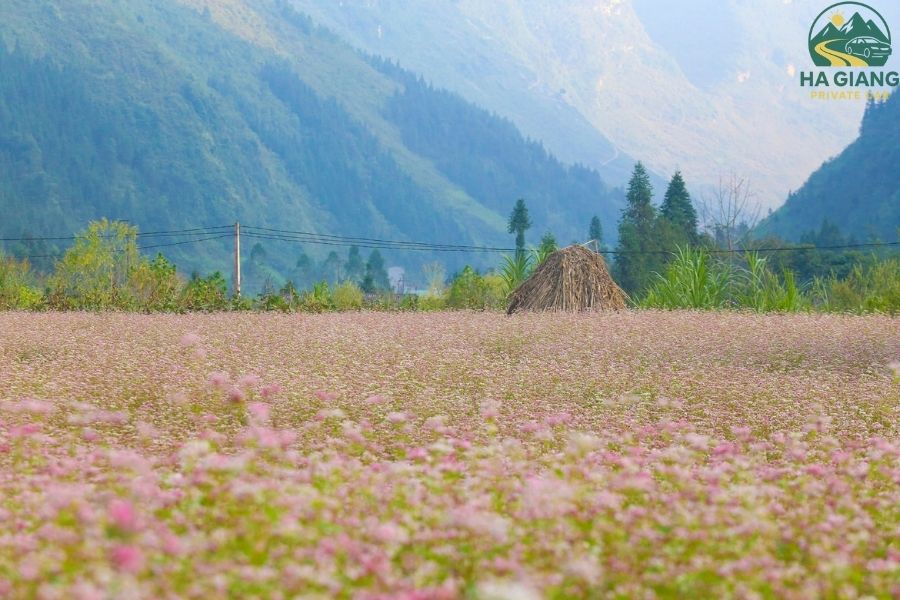
Winter begins to come, cold winds start to blow across the highlands, and it is a sign of the buckwheat flower season. The pale pink and light purple colors of buckwheat flowers cover the hillsides, captivating many people with their beauty.
Experience the Simple Life of the People

Amidst the vast, grey, rocky mountains, where life seems scarce, is the typical home of 19 different ethnic minorities. Altogether, they create a diverse picture of culture and race. Among them, the Mong people make up the majority, more than ninety percent, in the Dong Van Karst Plateau. They are present throughout the mountainsides; their way of life is closely linked to stone walls, brocade skirts, and tireless feet on the hillsides.
During the tourists’ journey here, tourists can see the rustic images of women holding their children. Additionally, there are children with red cheeks due to the cold. All are very rustic and simple, but this simplicity is not found everywhere.
Additionally, visitors can experience the daily life of local people when visiting the villages. Visitors can eat meals with the locals, play with the children, or participate in festivals.
Places to Visit At Dong Van Karst Plateau Global Geopark
Dong Van Old Quarter
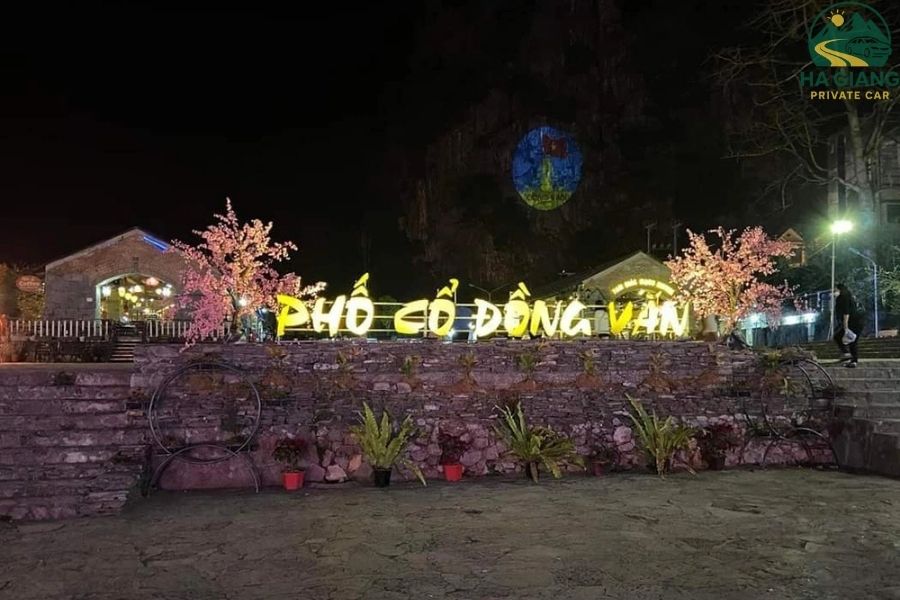
In the heart of the global geopark, Dong Van Ancient Town nestles like a living testament to time. Located in the center of town, this place used to be a deserted valley, with only a few houses scattered about. At the end of the 19th century, the street began to take shape, then gradually became a unique U-shape with three rows of yin-yang tiled houses embracing each other.
This is both a place to live and a small but unique trading point of the Dong Van stone plateau. Every day, hundreds of people come here to trade and buy products such as food, fabric, and fruit. Visitors can become customers to purchase items as souvenirs.
Sitting and sipping a cup of coffee early in the morning at the Old Quarter cafe, you will feel the full breath of the highlands. Everything here is not noisy, not ostentatious. Each tile, door frame, or a ray of sunlight shining through the cup of coffee carries the taste of the past.
The Vuong Palace
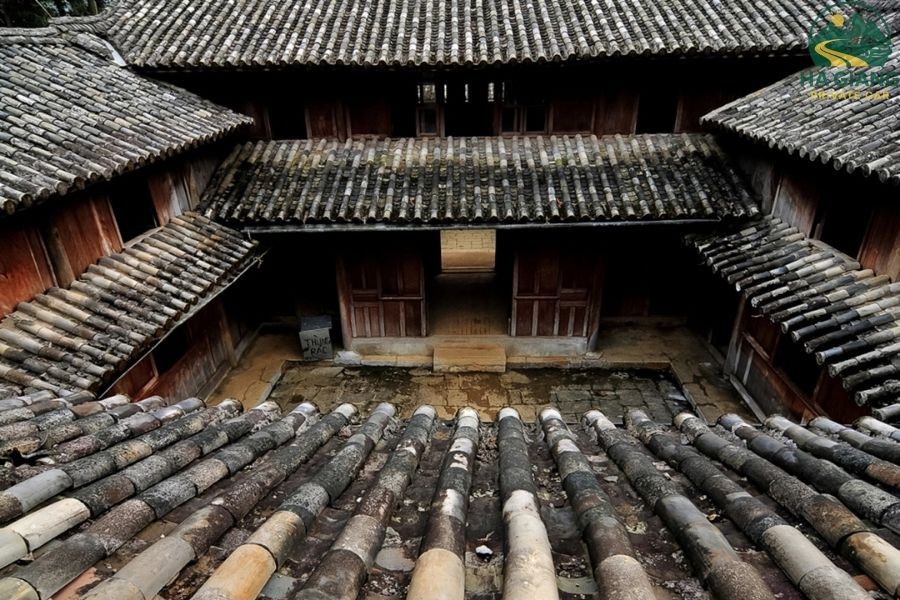
Located in Sa Phin commune, on the route from Ha Giang City to Dong Van, the Vuong family mansion resembles an ancient fortress amidst the wild mountains and forests. Approximately 13 kilometers from the center of Dong Van town, this construction was built in the early 19th century, taking eight years to complete. Covering an area of up to 1,120 m², the entire mansion is arranged in the shape of a turtle shell, a symbol of longevity and sustainability.
The architecture has a strong Qing Dynasty feel, harmoniously blending classical Asian features with the solidity of stone walls. The fence is built of boulders, with loopholes and guard posts like a defensive fortress in the middle of the forest. Inside are three stilt houses made of precious wood. The main house faces the main gate, and the two side houses are built symmetrically at right angles to it. Besides, the sturdy column structure, mossy tiled roof, floor, and walls all help to exude a quiet, ancient look.
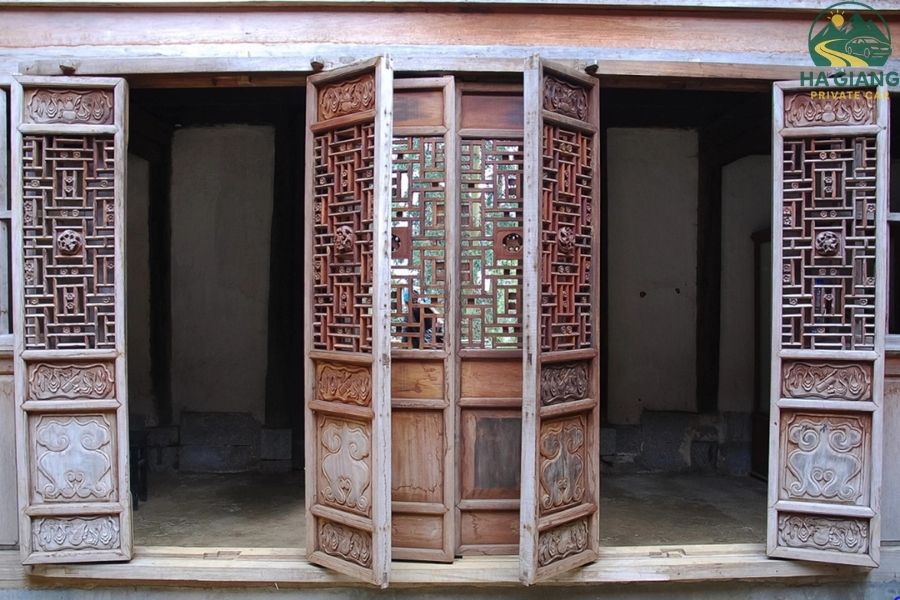
In particular, the mansion is surrounded by rows of tall trees, enhancing its majesty and isolation. In 1993, this place was recognized as a National Architectural and Artistic Relic, affirming the historical and cultural value that the Vuong family left in the heart of the Dong Van stone plateau.
Tham Ma Slope
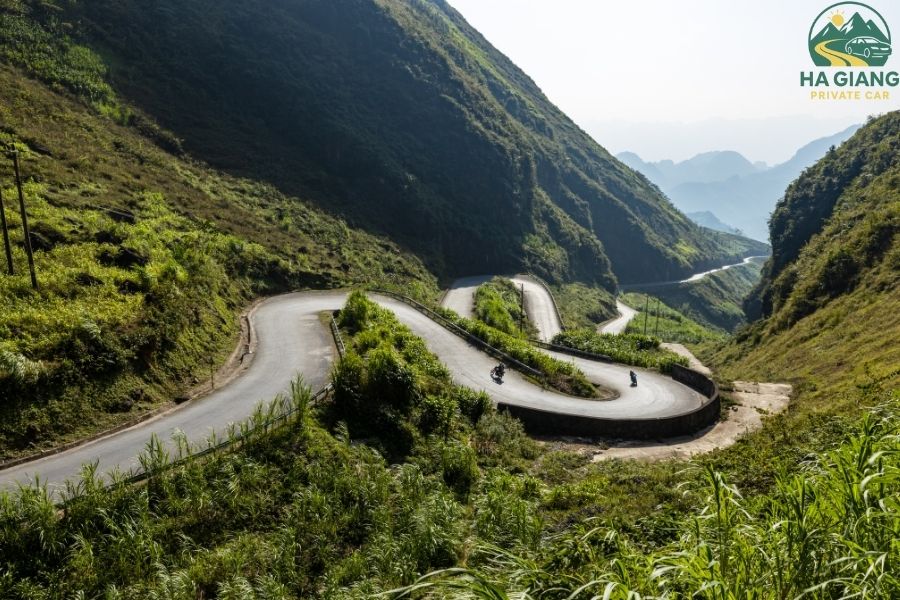
Located on Highway 4C, the Tham Ma slope connects Yen Minh and Dong Van, like a ribbon woven between the mountain rocks. The five-km-long road with nine dangerous curves is a test of mettle for experienced drivers.
Known as one of the most dangerous slopes in the Northern highlands, Tham Ma is not for the faint of heart. However, that is why this place has become an ideal meeting spot for backpackers, those who love to explore and capture beautiful photos.
Stopping in the middle of the windy road, you will take in the breathtaking mountain scenery. Here, you also have the opportunity to listen to ancient legends about love, human hearts, and the hardships of the past.
Nho Que River
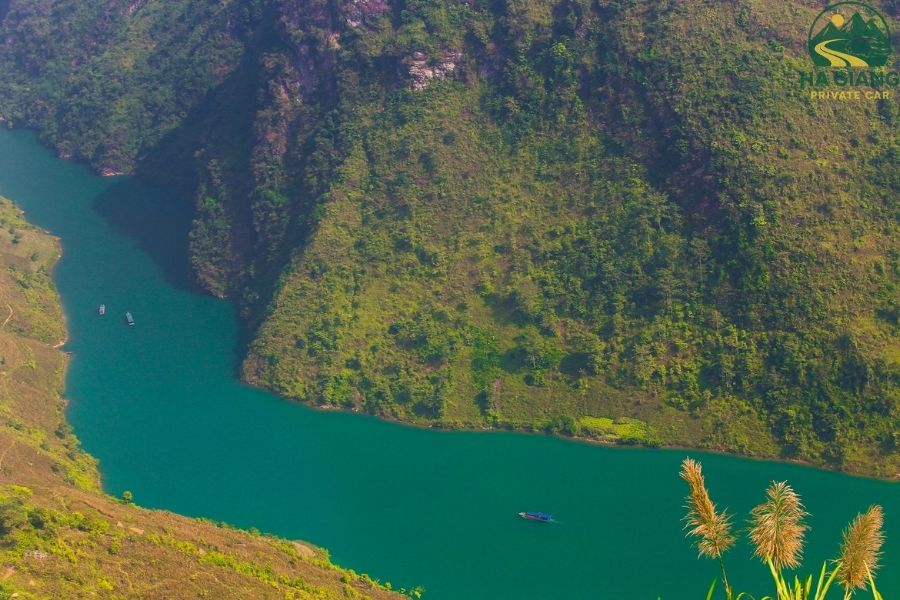
Originating from Yunnan (China), the Nho Que River quietly flows in a northwest-southeast direction. This river crosses the Dong Van and Meo Vac stone plateaus of Ha Giang, then merges into the Gam River in Cao Bang. The river section flowing through Vietnam is approximately 46 km long, winding quietly around Lung Cu, through Tu San Canyon, and nestling at the foot of the majestic Ma Pi Leng Pass.
What fascinates visitors is the rare, deep, clear emerald water. Almost all year round, the river surface is like a green mirror reflecting the mountains and the sky. In recent years, this place has become an ideal rendezvous for boating or kayaking.
Small note: The road down to the pier is quite steep and winding. If you are not accustomed to driving or unfamiliar with the area, consider hiring a local to ensure your safety.
Lung Cu National Flagpole
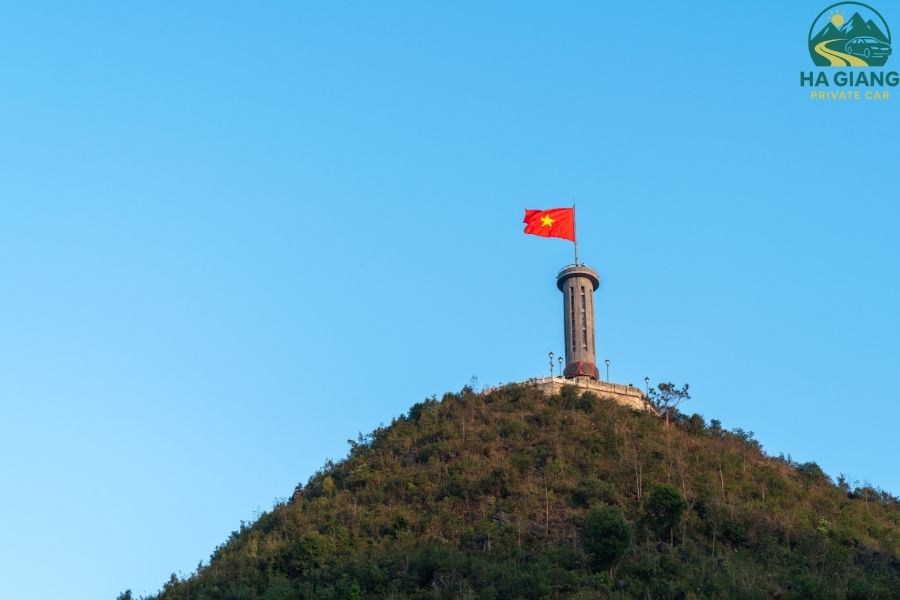
Located on the top of Dragon Mountain in Lung Cu Commune, this sacred flagpole rises 1,470 meters above sea level. Although not the exact northernmost point, it is only 3.3 km away from the North Pole as the crow flies, carrying an irreplaceable symbolic significance.
After numerous renovations and reconstructions, the current octagonal structure, which stands over 30 meters tall, was officially completed on September 25, 2010. The 54 square meter red flag with a yellow star flies proudly on top of the 9-meter-high flagpole. A number symbolizing the 54 ethnic groups living under the same roof as Vietnam.
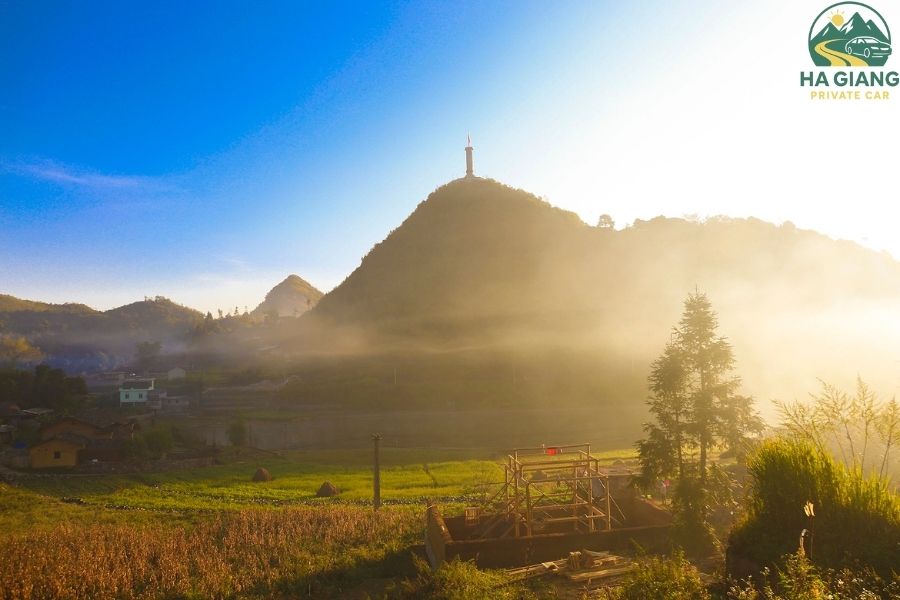
Standing on the flagpole and looking down, you will see two small lakes lying symmetrically on both sides of the mountain, which never dry up all year round, and are popularly called “dragon eyes”. From the Dong Van stone plateau, visitors only need to travel another 24km to reach the sacred point at the head of the Fatherland.
Pao’s House
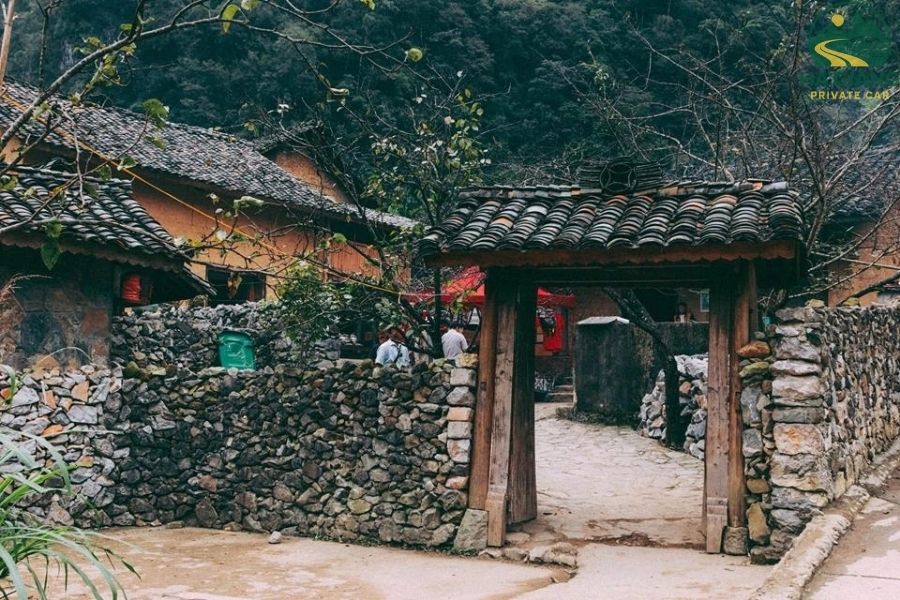
Nestled in Sung La Valley, the house featured in the movie “Pao’s Story” is actually an ancient Mong house, built in 1947. Not only is it a movie set, but it is also a cultural symbol of the rugged Ha Giang region. The ancient house in the movie “Pao’s Story” appears with earthen walls, wooden gates, and a rustic climbing flower trellis.
The house was built in the traditional architectural style, closed on all sides, with a sunny courtyard at its center. The front yard was paved with flat stones, surrounded by peach trees, plum trees, and apricot bushes. The simple beauty of the house was even more attractive when the flowers were in full bloom, making this place an ideal stop for anyone who loves the beauty and quiet of the mountains and forests.
Tourists who wish to visit only need to purchase a ticket for 10,000 VND to experience a moment of silence in the middle of the flower valley.
Pho Cao Commune Market
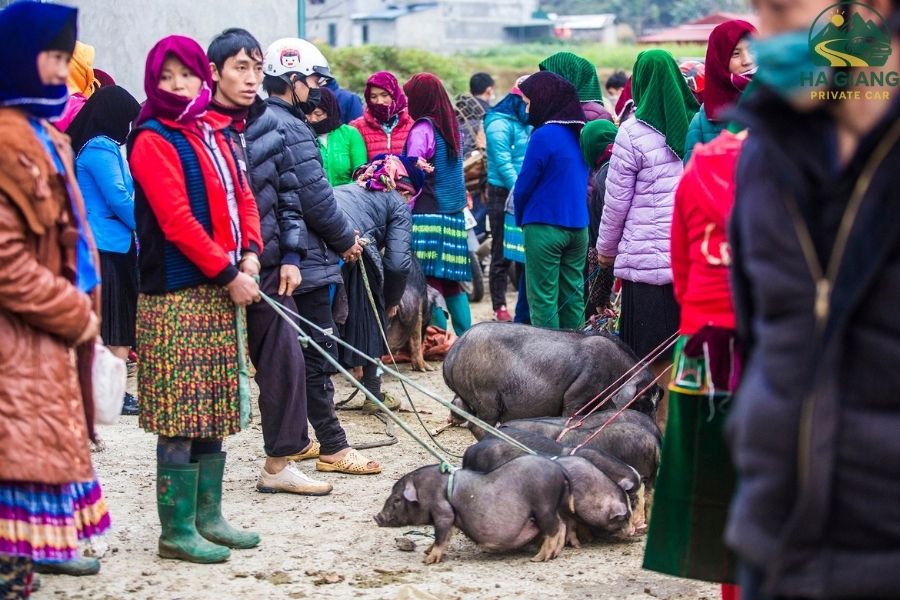
Approximately 25 kilometers from Dong Van town center, the Pho Cao market is held every six days, starting from the foggy sky and lasting until noon. Visitors can come here to enjoy local dishes and observe the trading activities of the people in the Dong Van Karst Plateau.
On market day, the village streets are bustling with laughter and colorful brocade dresses. Market-goers bring local products such as chickens, vegetables, fabrics, scarves, or freshly sharpened knives. This is not simply a place to buy and sell, but also an opportunity for the community of 17 ethnic groups in the region to meet, chat, and exchange cultures.
What To Eat At Dong Van Karst Plateau?
Dong Van Karst Plateau is not only famous for its wild natural beauty but also a place that contains many culinary quintessences. Let Ha Giang Private Car show you the special dishes that you cannot miss at the Dong Van Karst Plateau UNESCO Global Geopark.
Thang Co
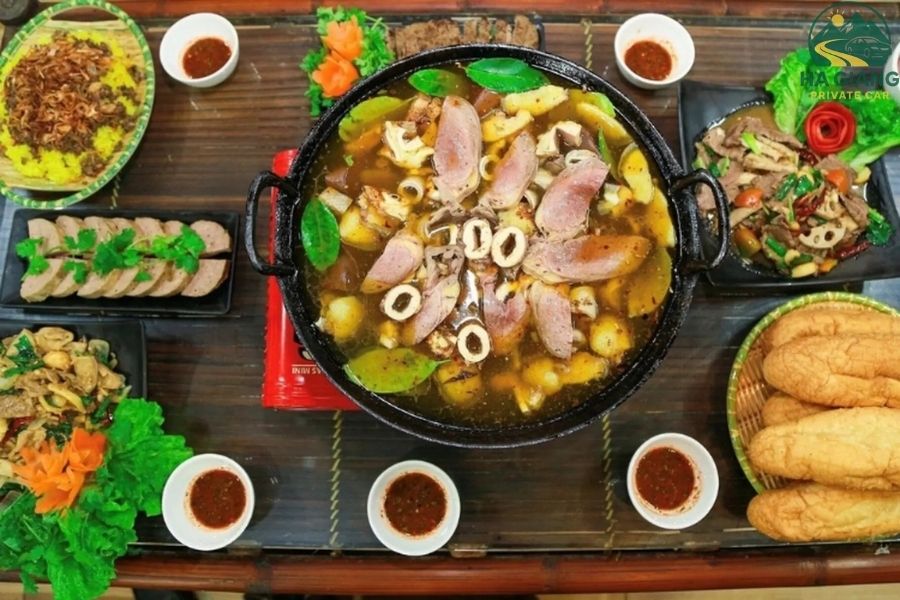
Thang Co is a traditional dish of the Hmong people, famous in the markets of the Ha Giang highlands. This dish is typically cooked in large pans, featuring the main ingredients of horse, beef, or buffalo meat, combined with a variety of special spices from the mountains and forests. The flavor of Thang Co is rich and slightly spicy, evoking a feeling of warmth in the cold air of the rocky plateau.
Thang Co is not just a dish; it is also a cultural feature closely associated with community life. People often gather around a pot of Thang Co in the market, eating and chatting, creating a cohesive and joyful atmosphere. For tourists, enjoying Thang Co is a way to gain a deeper understanding of the customs, habits, and hospitality of the highland people.
Ha Giang Sour Pho
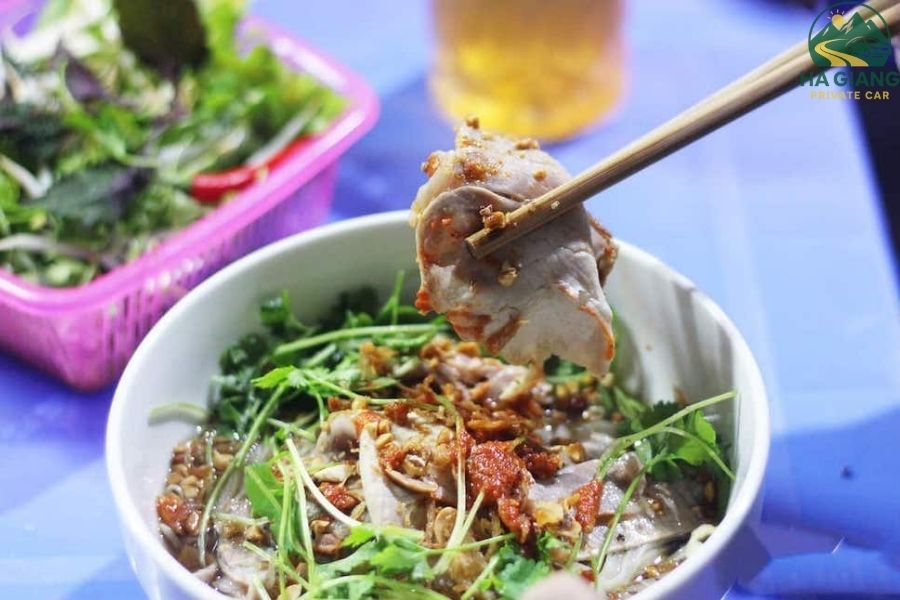
Ha Giang sour pho is a specialty dish with a unique flavor that differs significantly from traditional pho. The soft and chewy pho noodles are served with a sweet and sour sauce made from vinegar, sugar, garlic, and local spices. The highlight of the dish is the char siu pork, crispy roasted peanuts, herbs, and sometimes roasted duck or chicken, creating a combination that is both refreshing and rich.
Not only a dish, but Pho Chua is also associated with the atmosphere of the highland market. Locals and tourists often enjoy Pho Chua on chilly mornings, savoring the simple life of the rocky plateau while eating. It is this simplicity, but full of creativity, that has made Pho Chua a typical culinary culture of Ha Giang, leaving an unforgettable impression on anyone who has ever tasted it.
Buckwheat Cake
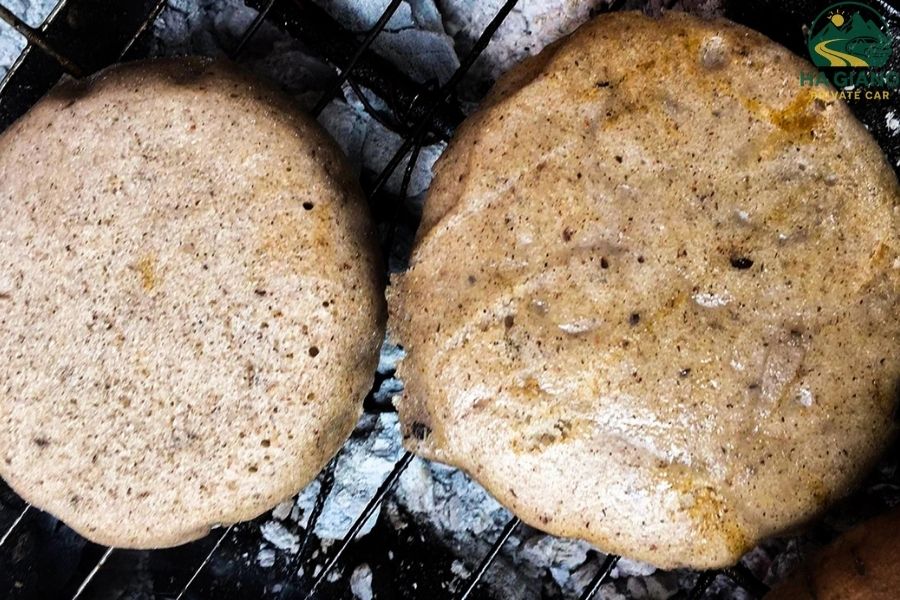
In the midst of the purple buckwheat flower season covering the rocky plateau, the people of Ha Giang have created a simple yet sophisticated dish – buckwheat cake. The tiny seeds are ground into flour, baked on a hot cast-iron mold, creating a soft, fragrant cake with the flavor of the mountains and forests.
Enjoying buckwheat cake is not only about tasting a dish, but also about feeling the soul of the highlands. In Dong Van market, amidst the bustling laughter, visitors holding hot cakes in their hands seem to be immersed in the rustic and cultural life of the northernmost land in the homeland.
Buffalo Jerky
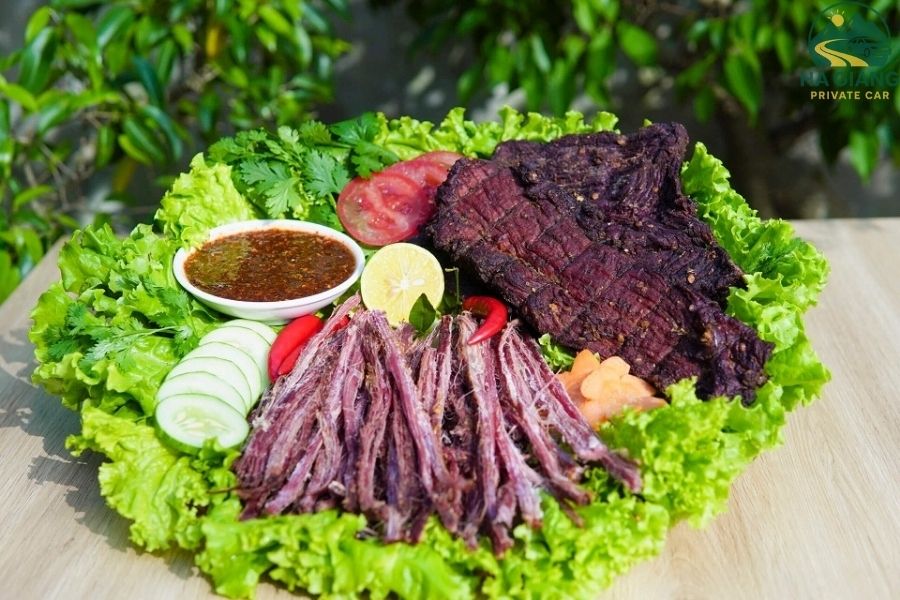
In the highland villages, buffalo meat, after being marinated with wild spices such as makhen, ginger, and lemon grass, is hung in the kitchen to smoke. Over time, each piece of meat will become firm and chewy, yet still retain its natural sweetness, mingled with the pungent aroma of kitchen smoke.
The dish is not only a source of enjoyment but also a cultural feature of the people in the highlands. During festivals or when hosting distinguished guests, smoked buffalo meat is often presented as a sincere gesture of invitation. When shredded, grilled, and dipped in Cham Cheo, the rich flavor evokes the rustic, warm atmosphere of the rocky plateau forever.
Five-color Sticky Rice
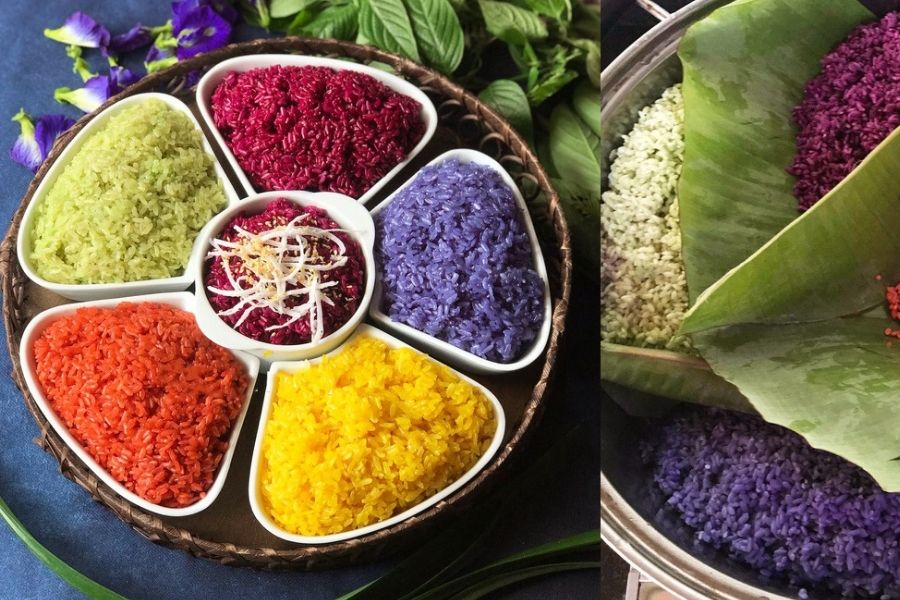
Five-color sticky rice is a traditional dish of ethnic minorities, especially in Ha Giang. As the name suggests, this sticky rice dish has five different colors. People dye each color of sticky rice using different types of leaves and natural fruits. All of these create five colors, respectively, red, yellow, green, purple, and white. The five colors of sticky rice represent the five elements, as well as good fortune and prosperity.
This dish demonstrates the culinary ingenuity and sophistication of the people of the mountainous region. This sticky rice dish often appears on special occasions, such as weddings, festivals, and Tet. People use this for worship or to entertain distinguished guests.
Corn wine with yeast leaves
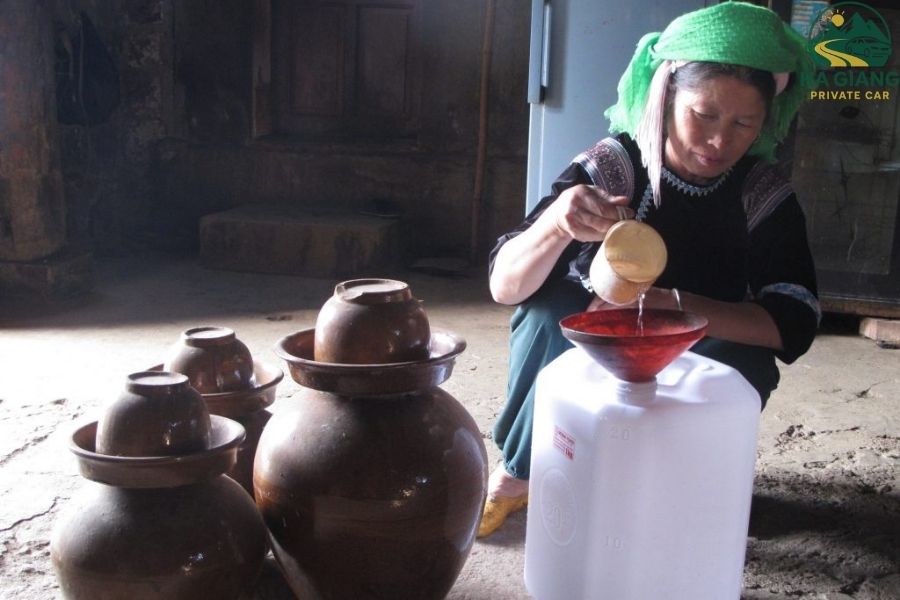
At the Dong Van Karst Plateau, visitors can enjoy their meals accompanied by a traditional drink, specifically corn wine. But only for those who can drink alcohol and are in good health. Enjoying a meal with a glass of corn wine will make the dish much more wonderful.
Best Time To Visit Dong Van Karst Plateau
Spring (March – May)
- Peach and plum blossoms are in full bloom, creating a romantic scene on the rocky plateau.
- The weather is cool and pleasant, making it suitable for trekking and exploring the villages.
Summer (June – August)
- The climate is quite hot and humid, it rains a lot, and the roads can be slippery.
- However, this is the green season of the mountains and forests, making it ideal for those who love the wild nature.
Autumn (September – November)
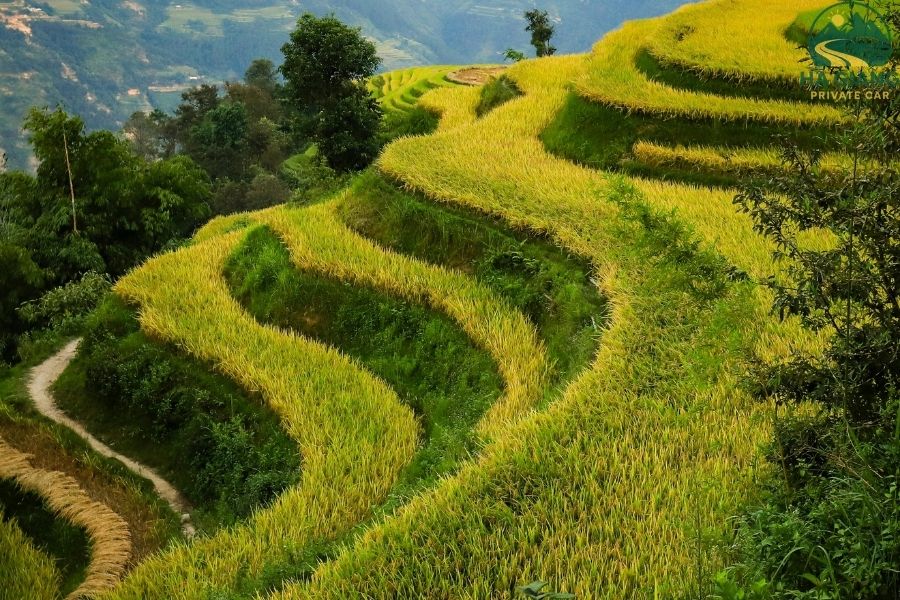
- The golden rice season on the terraced fields is a brilliant scenery.
- Especially during the buckwheat flower season (October–November), when the plateau is covered in a purple haze, a large number of tourists flock to the area.
Winter (December – February)
- It’s cold and foggy, but it’s the season of yellow rapeseed flowers and peach blossoms.
- The chilly air brings a very typical highland experience.
Conclusion
Dong Van Karst Plateau is not only a prominent destination of Ha Giang but also a unique cultural and geological symbol of Vietnam. With majestic landscapes, brilliant flower seasons, and diverse ethnic identities, this place offers visitors an experience that is both wild and full of humanity.
If you are looking for a journey to explore the majestic nature and enjoy culinary specialties such as thang co, pho chua, tam giac mach cake, or dried buffalo meat, then the Dong Van Karst Plateau is the perfect choice. Make a plan today to enjoy the beauty of the “gray kingdom” of rocks and wind, where the exceptional geological, cultural, and historical values of the northernmost region of the Fatherland are preserved.
Ha Giang Private Car hopes you have found all the information about the Dong Van Karst Plateau useful. Thank you for taking the time to read our article. We hope that it will help you with your trip to Ha Giang and the Dong Van Karst Plateau.