

Introduction
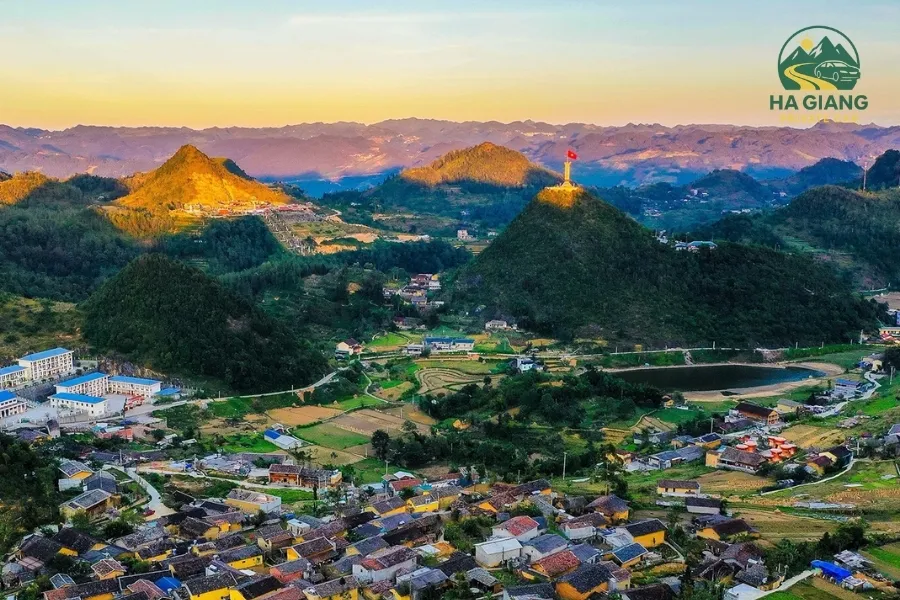
Ha Giang is Vietnam’s northernmost province, known for its majestic mountain passes, terraced valleys, and the legendary Ha Giang Loop that draws travelers from around the world. Its rugged landscape is home to a strong indigenous culture, making up nearly 90% of the local population, and at Ha Giang Private Car, we help visitors plan the journey Hanoi to Ha Giang experience in comfort and safety.
How To Get From Hanoi To Ha Giang is one of the most common questions travelers ask when planning a trip to Vietnam’s northern mountains. While Ha Giang is well worth the journey, there’s no airport or railway connecting it to the rest of the country. So what’s the best way to get from Hanoi to Ha Giang?
Route Map And Travel Time To Ha Giang
Route Map & Journey Overview
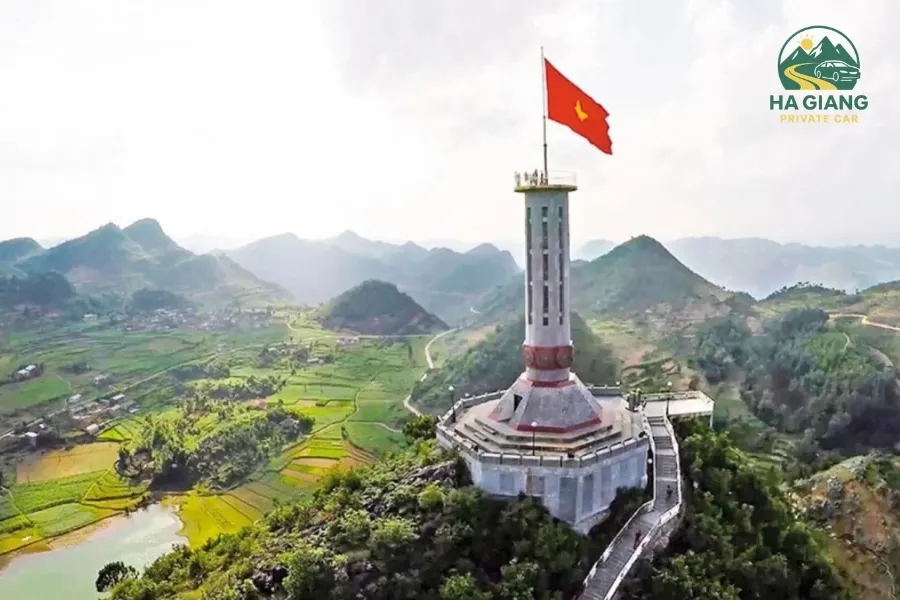
The Ha Giang Loop isn’t just one destination, it’s a journey through some of Vietnam’s most breathtaking landscapes. Along the way, travelers pass through Ma Pi Leng Pass and Tham Ma Pass, both known for their dramatic switchback roads, before continuing on to the Lung Cu Flag Tower, Dong Van karst plateau, and the Nho Que River.
Every stop along this journey adds its own chapter to the adventure, from hairpin turns that offer sweeping mountain views to quiet towns steeped in local heritage. Together, these stops make up a route that rewards every hour spent on the road.
Hanoi To Ha Giang Distance
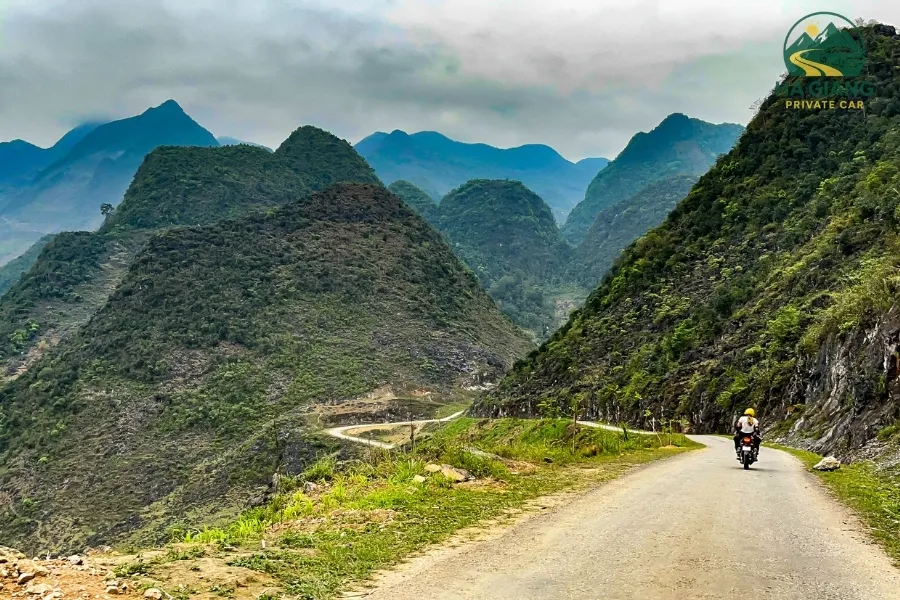
The distance from Hanoi to Ha Giang is roughly 300 kilometers, though this can vary slightly depending on your exact starting point and the route you take. Much of the journey winds through mountainous terrain rather than highway, so it takes longer to cover than the distance alone suggests. This is one of the main reasons travelers often ask how to get from Hanoi to Ha Giang in the first place, since the road itself shapes the entire experience.
How Long Does The Trip Take?
Travel time typically ranges between 5 and 9 hours, depending on your mode of transport.
Weather and road conditions play a big role too, since the mountain passes are full of sharp curves that slow things down, especially after rain. If you’re riding in a private car, expect the trip to stretch a little longer, as most drivers are happy to pull over so you can soak in the view along the way.
How To Get To Ha Giang From Hanoi
By Shared Limousine Bus

If you’re traveling on a budget, a shared limousine bus is one of the easiest ways north. Buses run overnight with reclining seats, gently rocking you to sleep for the 6 to 7 hour ride, so you wake up already in the mountains.
That comfort comes with a few trade-offs. You’ll need to arrive at the bus station on time, carry your own luggage, and may have no child seat available if you have babies, something a private car can easily provide for little ones. Seats also go fast on weekends and holidays, so book ahead.
By Motorbike

There’s a reason so many backpackers dream of riding to Ha Giang themselves, there’s nothing quite like the wind in your face as the mountains unfold around you, at a pace entirely your own.
But freedom comes with real risk. You’ll need an International Driving Permit (IDP) and genuine experience on winding mountain roads, since the route shares space with trucks and buses that don’t always slow down for tight curves. It’s also physically tiring, around 5 to 8 hours in the saddle, so many riders split the trip over two days just to recover.
By Train Plus Bus (Via Lao Cai)
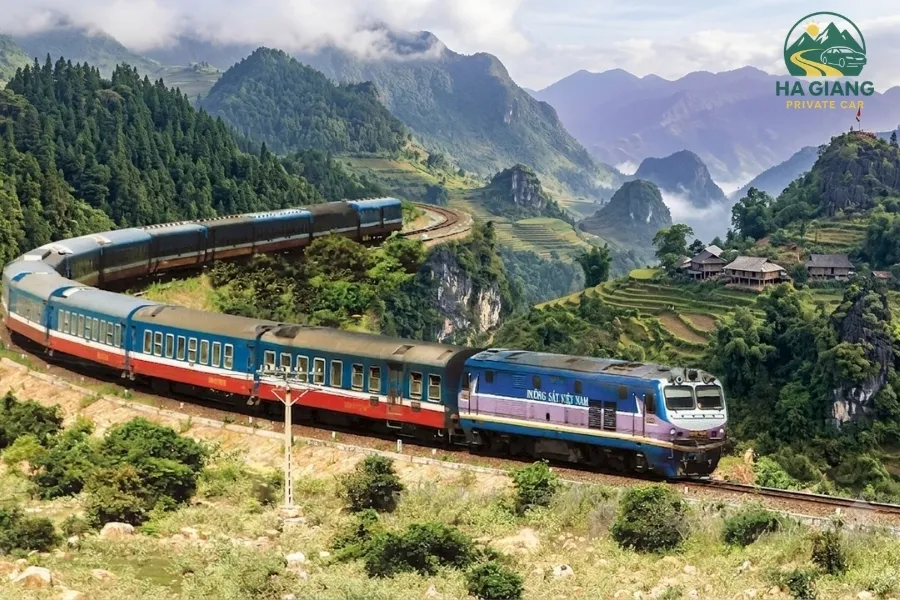
Already dreaming of Sapa before Ha Giang? An overnight train to Lao Cai lets you sleep through the miles and wake up deep in the mountains, no long hours on the road just yet. From there, a local bus carries you onward to Ha Giang.
It’s less about speed, more about the scenery, one dramatic landscape fading into another. A lovely detour if Sapa’s already on your list, though it does take longer than heading to Ha Giang directly.
By Private Car

A private car takes every one of those trade-offs off the table. There’s no shared schedule to work around, no bus station to find, no physical strain, and no risky roads to navigate yourself, just a driver who picks you up at your hotel and takes you straight to Ha Giang.
This level of comfort comes at a higher price than a bus ticket. In exchange, travelers gain back those 6 to 7 hours as comfort rather than compromise, stopping whenever a view merits it, traveling at their own pace, and arriving relaxed rather than fatigued. For families, small groups, and travelers who prefer to spend their time enjoying Ha Giang rather than enduring the journey there, this difference is often considered well worth the additional cost.
Tips For Traveling To Ha Giang
Booking tickets
We recommend booking through international platforms like Klook, or directly through hostels and tour operators with English reviews on Booking.com or TripAdvisor. Try to book at least two weeks ahead to avoid sold-out slots, and to leave yourself some room to adjust your plans if things change.
Pack Light, But Pack Smart

To keep your trip running smoothly, we suggest bringing some cash with you, since ATMs and card payments are hard to come by in the mountains, and many homestays and small eateries only accept cash. Carry your passport too, as some homestays and hotels near the border require it for guest registration. A portable charger is also worth packing, since power isn’t always reliable along the way.
It’s also smart to bring some waterproof gear, think a rain cover for your backpack and quick-dry clothing, since mist and light rain are common in the mountains. If you’re carrying any electronics, wrap them well to protect them from sudden weather changes.
Start Early To Arrive Before Night Time
We recommend you try to hit the road early in the morning. You’ll catch soft sunrise light spilling through the mountain passes, enjoy cooler, cleaner air, and avoid the harsher afternoon heat.
It’s also worth knowing that traffic here doesn’t always follow the rules you might be used to back home, motorbikes and trucks driving against traffic or overtaking on blind curves are fairly common. If you’re riding your own motorbike, stay extra alert, especially on the mountain roads.
Time Your Trip With The Seasons
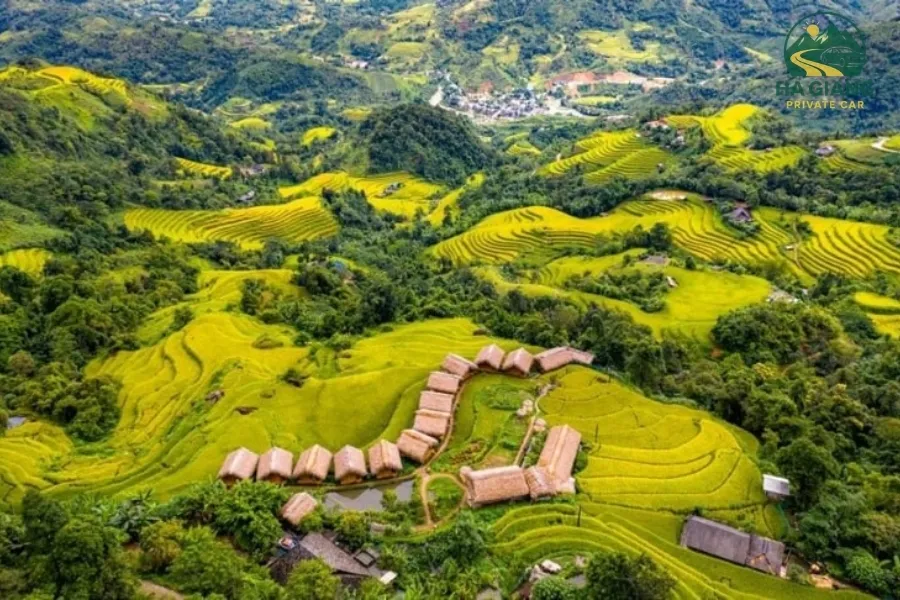
September to October: Golden rice terraces ripen across Hoang Su Phi and the surrounding valleys, with cool, pleasant autumn weather.
November to December: Buckwheat flowers are blooming, with a flower festival held in Dong Van. Temperatures start to drop into deep winter chill.
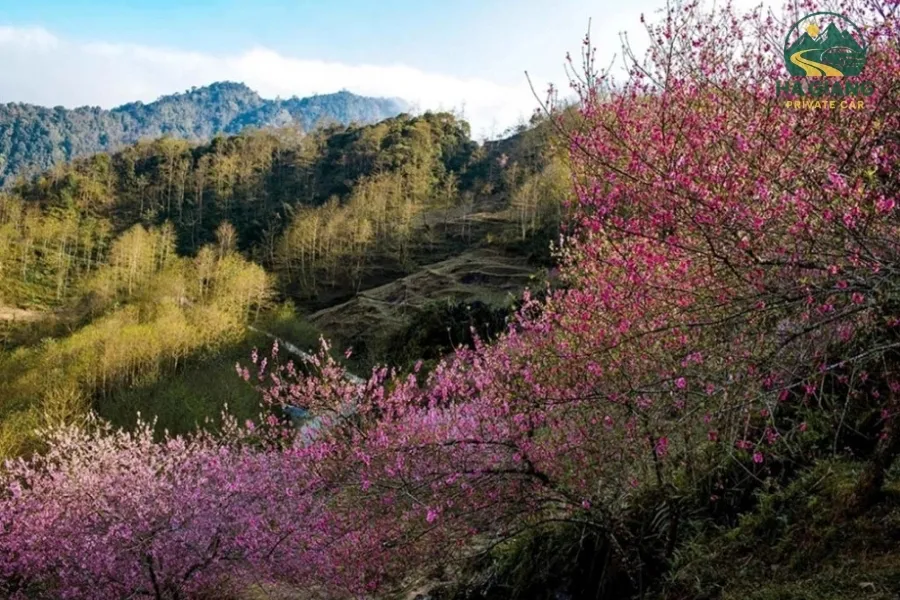
February to April: Peach and plum blossoms turn the hillsides white, perfect for a spring trip and exploring local culture.
What To Do After Reaching Ha Giang
Once safely arrived in Ha Giang, most travelers are eager to experience its winding mountain roads and rich indigenous culture. With that in mind, Ha Giang Private Car is pleased to recommend the following landmarks, each one difficult to overlook once you’ve set foot in this region.
Conquer The Ha Giang Loop
The Ha Giang Loop is defined by its winding mountain passes, roads that stir a sense of excitement in every traveler who takes them on. Amid the crisp, untouched air of the highlands, visitors are given the freedom to let their spirit wander through nature, as the scenery shifts with elevation and light.
Alternating between sunlit clarity and drifting mist, the landscape creates a feeling of wonder rarely found elsewhere on earth. Unlike other roads around the world that bend and fold themselves around every ridge, the Ha Giang Loop delivers its own unforgettable sensation through a serpentine path all its own.
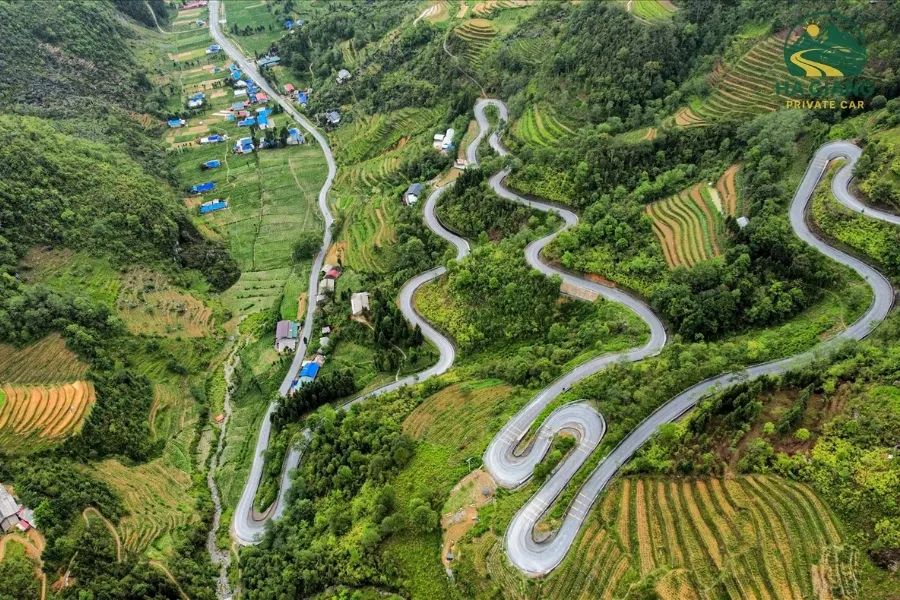
The journey begins in Quan Ba, among green valleys and limestone plateaus, before softening into the pine forests of Yen Minh. From there, the Loop leads travelers into the living heart of Dong Van’s market culture, a place that asks to be lived in rather than merely observed, before opening out into Meo Vac, where sheer cliffs, Ma Pi Leng Pass, and the Nho Que River below come into full view.
Explore The Dong Van Karst Plateau
Recognized by UNESCO as a Global Geopark and home to roughly 17 ethnic minority groups, the Dong Van Karst Plateau invites travelers to witness limestone formations that predate even the age of the dinosaurs, some 400 to 550 million years in the making.
Its ancient rock and dramatic terrain carry visitors through a living record of geological history, one shaped over millions of years of transformation. What lingers longest in travelers’ minds is the ingenuity of the people who call this plateau home, and how life takes root where the land itself is stone.
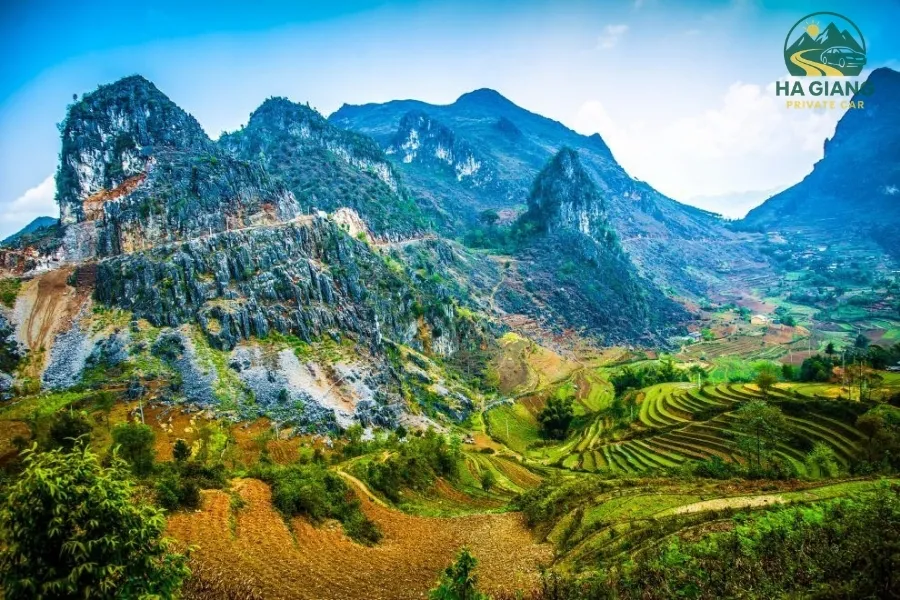
Locals fill the cracks between rocks with soil to grow corn, the same corn that becomes men men, a signature local dish, while stone itself is shaped into fences, walls, courtyards, and livestock pens. These weathered stones endure the passing of time much as the people here do, and travelers are encouraged to slow down and take in this landscape, unlike anywhere else in Vietnam.
Witness The Majestic Ma Pi Leng Pass
Ma Pi Leng is counted among Vietnam’s four legendary mountain passes, rising to a dizzying 1,200 to 1,600 meters above sea level. It is far more than a single viewpoint; the pass curves and unfolds continuously, offering travelers a shifting sensory experience with every turn.
Visitors find themselves immersed in the sound of wind sweeping through the mountains, moving through scenes that no photograph could ever fully capture. Beyond the natural beauty carved from limestone and shale over millions of years, this mountain pass also carries the weight of extraordinary human effort.
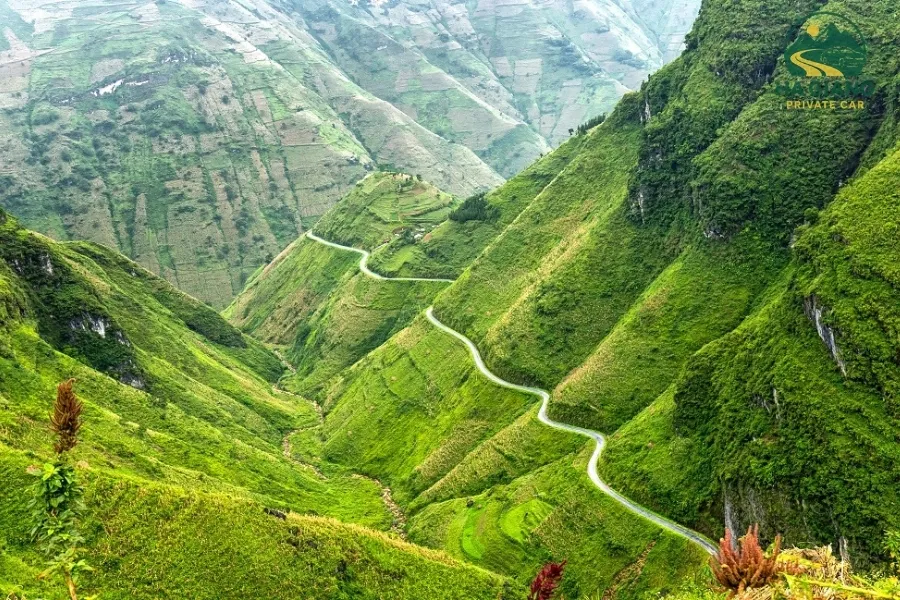
More than a thousand youth volunteers and a thousand more local ethnic laborers built this road without modern machinery, at times suspended by rope along sheer cliff faces to carve a path where none had existed. Ma Pi Leng stands today as a testament to human resolve, a road cut through stone under conditions few could imagine enduring.
Cruise The Serene Nho Que River
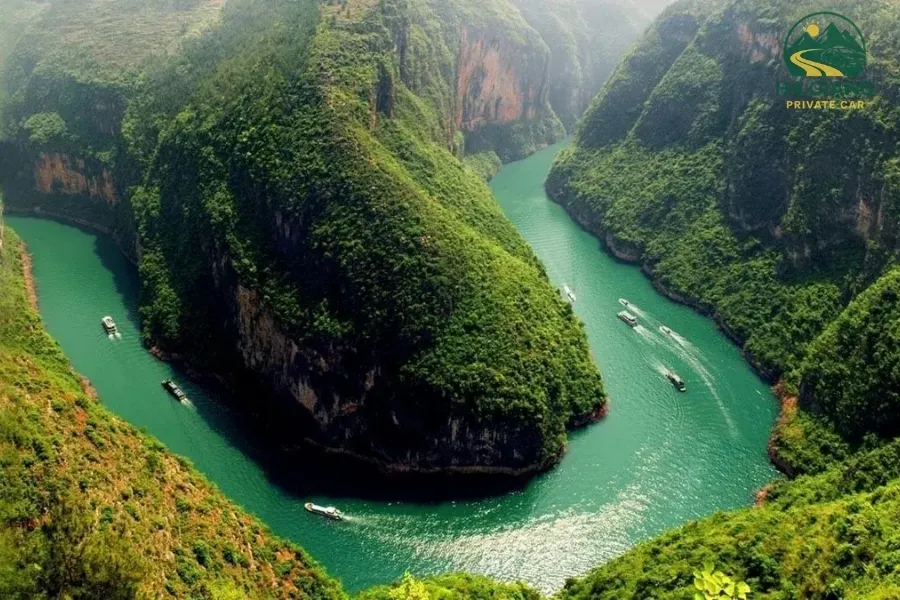
Looking down from a rest stop along Ma Pi Leng Pass, the Nho Que River comes into view in all its beauty. It is more than simply a river; it is the product of millions of years of geological formation, where water and stone together carved one of the deepest and most striking canyons in Southeast Asia.
Where the Loop fills the senses with rushing wind and engine noise, the Nho Que River offers a rare moment of stillness in the journey, its jade-green waters alone are enough to leave travelers momentarily lost in thought. Along the Nho Que, visitors can look back up at towering cliff walls from below, and simply let their mind drift with the current.
Experience Rural Life In Lo Lo Chai Village
After a journey spent immersed in Ha Giang’s landscapes, we especially invite travelers to experience local culture in Lo Lo Chai village. Resting at the foot of the Lung Cu Flag Tower, Vietnam’s northernmost point, the village was named the World’s Best Tourism Village 2025 by UN Tourism.
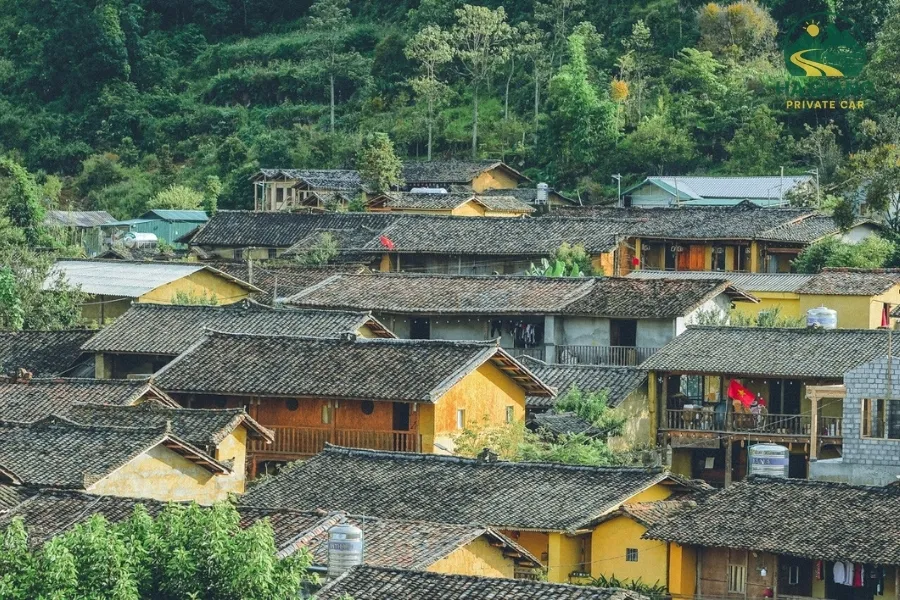
Home primarily to the Lo Lo ethnic community, the village stands out for its quiet, timeworn beauty, with stone fences and golden clay walls built to hold back wind and earth, using entirely natural materials.
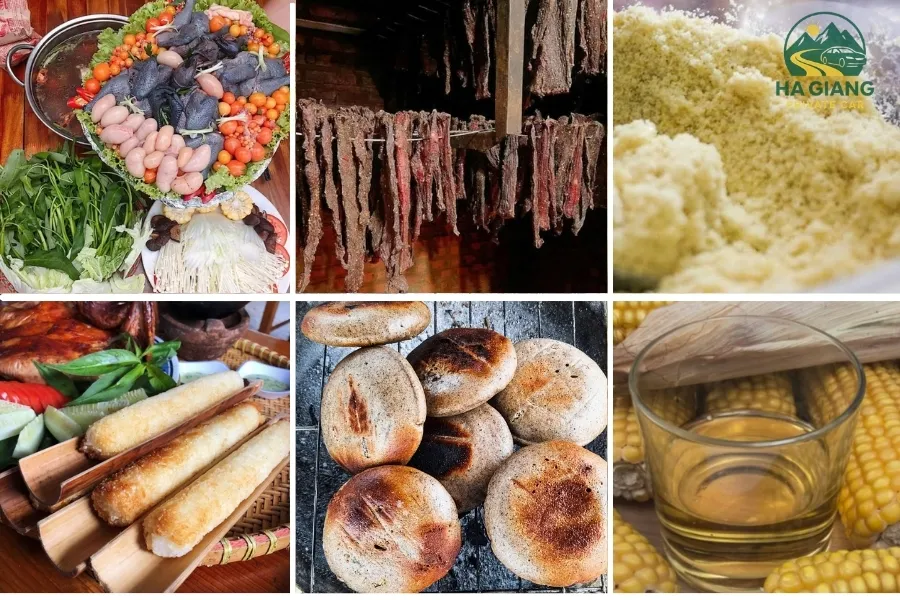
Lo Lo Chai is far more than a tourist village; it holds onto its communal way of life, traditional crafts, and daily rhythms, drying corn, raising chickens, and sending children off to school, all of it a living culture preserved across generations. Travelers can also sample local specialties here, including black chicken hotpot, smoked buffalo meat, men men, bamboo rice, buckwheat cake, and corn wine.
Frequently Asked Questions
Is there a direct bus from Hanoi to Ha Giang?
Yes, sleeper buses and limousine vans run directly between Hanoi and Ha Giang, with no need to transfer.
Do I need an international driving license to ride a motorbike to Ha Giang?
Yes, an international driving permit is required, along with solid riding experience for mountain roads.
Is the road from Hanoi to Ha Giang safe?
The road is generally safe when traveled with care, but it does involve winding mountain sections shared with larger vehicles, so caution is important, especially for motorbike riders.
Is a private car worth it for families or elderly travelers?
Yes, a private car offers door-to-door pickup and a more comfortable, flexible ride than a shared bus.
What is the best time of year to visit Ha Giang?
September to November is best, for golden rice terraces and blooming buckwheat flowers.
Conclusion
However you choose to travel, figuring out how to get from Hanoi to Ha Gang is really just the first step of a much bigger adventure. Whether you prefer the affordability of a sleeper bus, the comfort of a private car, or the thrill of riding there yourself, each option brings you closer to some of the most breathtaking scenery in northern Vietnam.
Thank you for reading this guide from Ha Giang Private Car — we hope it helps you plan a smooth and memorable journey into the mountains.