

Introduction
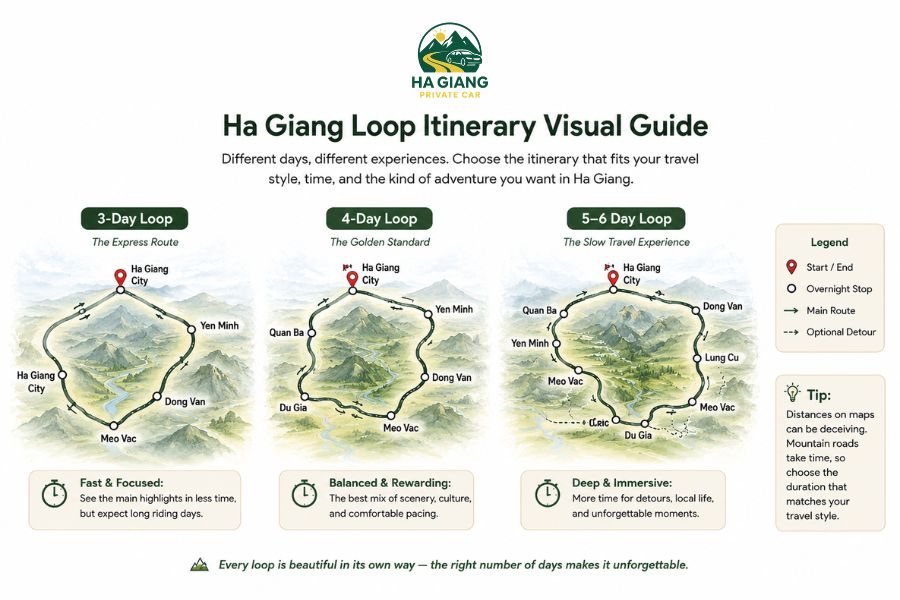
If you are planning a trip to Vietnam’s rugged northern frontier, the first logistical hurdle you will face is figuring out how many days in Ha Giang are enough. The short answer is straightforward: four days is the golden standard for most travelers. A three-day trip works if your schedule is tight but demands long hours in the saddle, while five to six days allows you to venture off the beaten path into a truly immersive mountain journey.
Unlike navigating coastal highways or city grids, mountain travel on the frontier obeys its own rules. A distance that looks short on Google Maps can easily take twice as long in reality. You must factor in dizzying switchbacks, steep mountain passes, sudden mist, and the unavoidable urge to pull over every ten minutes to photograph the landscape.
Ultimately, determining how many days in Ha Giang are enough depends less on pure mileage and more on your riding experience, your tolerance for mountain roads, and how deeply you want to connect with the local ethnic culture.

Quick Answer: How Many Days Are Best For Ha Giang?
For a quick reference before diving into the logistical realities, this matrix breaks down the ideal trip duration in Ha Giang based on your travel style and pacing.
| Duration | Best For | Daily Riding Pace & Experience |
| 3 Days | Fast-paced backpackers and travelers on a strict, limited schedule. | High Intensity: Covers the core loop highlights but requires 6–7 hours of demanding riding per day. |
| 4 Days | First-time visitors wanting the perfect balance of adventure and comfort. | Moderate Pace: The ideal trip duration in Ha Giang. Allows for afternoon cultural stops, side loops, and manageable road hours. |
| 5–6 Days | Slow travelers, photographers, and culture enthusiasts. | Relaxed & Immersive: Leaves ample time for hidden detours, trekking, and photography without racing the sunset. |
Transportation Realities That Affect Your Timeline
To accurately answer how many days do you need in Ha Giang, you have to look beyond a list of viewpoints. Practical, on-the-ground variables will dictate your daily pace far more than an online itinerary blueprint.
Hanoi To Ha Giang Transfer Factors
A rookie mistake is forgetting that the loop does not start in Hanoi. The journey from Hanoi to Ha Giang City spans roughly 300 kilometers and takes 6 to 8 hours depending on your transit choice.
- Overnight Sleeper Bus: Departs Hanoi around 9:00 PM to 11:00 PM, arriving in Ha Giang City in the early hours of the morning (around 4:00 AM). While this saves daylight and lets you start riding on Day 1, sleep quality can be unpredictable.
- Daytime Limousine Van: Offers superior comfort and safety but consumes a full day of travel, meaning your actual loop itinerary cannot begin until the following morning.
Moreover, tourists may want to take a look at Ha Giang Car Rental and Ha Giang Luxury Car services for their transportation.
Expert Note: To avoid exhaustion on your first day of riding, always treat the transit from Hanoi as “Day Zero.” A true 4-day loop requires 4 full days in the province, which means allocating 5 calendar days total if you include daytime transit.
Self-Riding vs. Easy Rider Pacing
How you choose to handle getting around Ha Giang fundamentally dictates how much ground you can safely cover each day:
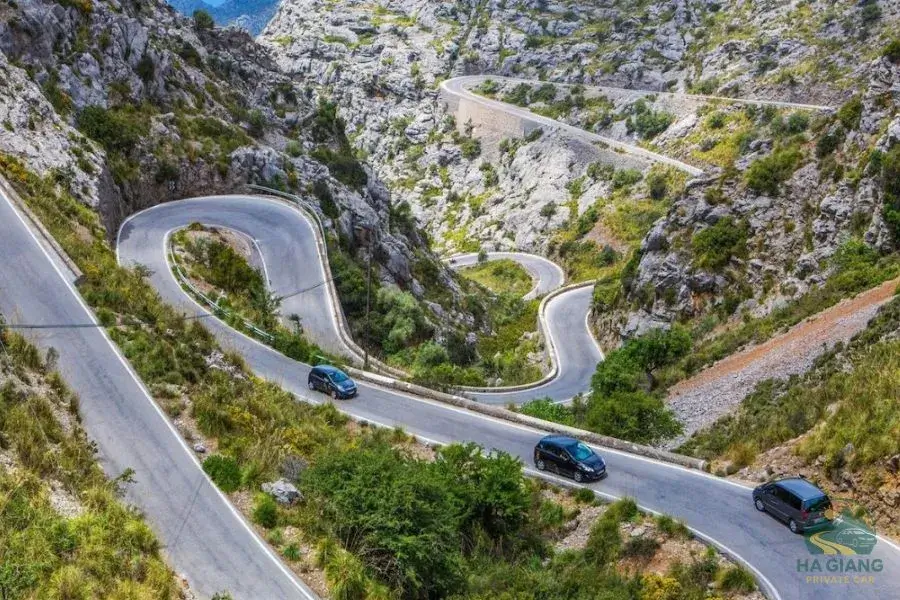
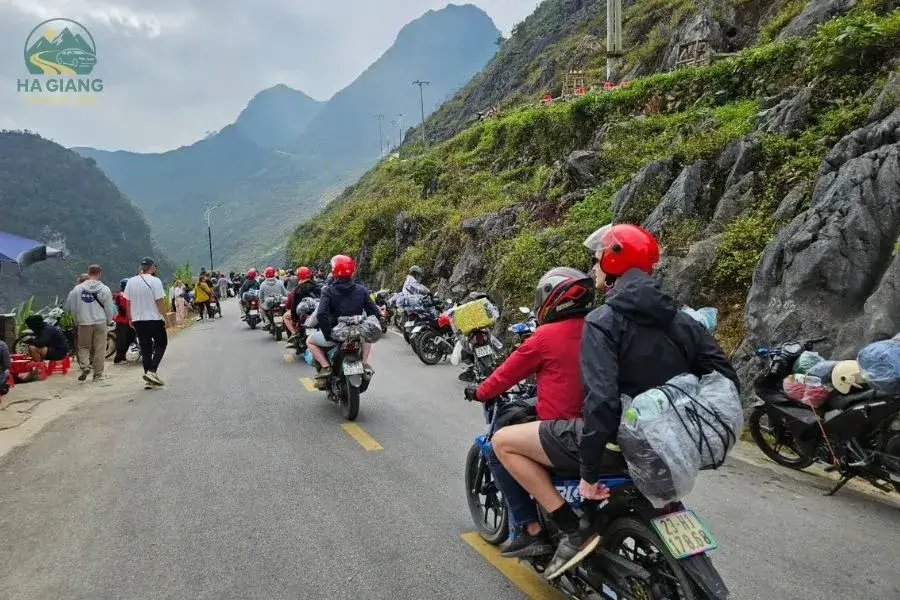
- Self-Riding: If you are an experienced motorbiker, riding yourself offers ultimate freedom. However, navigating the sharp hairpins of the Bac Sum Pass or the steep inclines of Chin Khoanh Pass requires intense mental concentration. Fatigue sets in fast, reducing your safe average speed to around 20–30 km/h.
- Easy Rider (Local Drivers): Hiring a local licensed driver allows you to sit back, keep your eyes on the towering karsts, and capture photos on the move. Because local drivers know every pothole and bend, they maintain a more consistent, efficient pace without the mental exhaustion.

Mountain Weather and Daylight Travel
The northern highlands experience dramatic microclimates:
- In the cooler months (November to March): Dense morning fog often blankets the ridges of Quan Ba and Yen Minh. This forces drivers to wait until mid-morning for safe visibility.
- During the rainy season: Sudden afternoon downpours can turn mountain roads slick, causing travel times to double instantly.

Before locking in your dates, checking the best season to visit Ha Giang is crucial to aligning your expectations with reality. Furthermore, mountain daylight fades fast. Once the sun drops behind the high stone walls of Dong Van, temperatures plummet, and riding becomes highly hazardous.
Tip: A solid Ha Giang packing list featuring windproof layers, rain gear, and sturdy footwear is mandatory to handle these sudden shifts without delaying your schedule.
Plan Your Ha Giang Itineraries: Realistic Routes & Trade-Offs
3-Day Highlight Loop
This 3-day express route is best for time-crunched travelers who want to check off the most famous vistas.
Route Structure:
- Day 1: Ha Giang City → Bac Sum Pass → Heaven’s Gate (Quan Ba) → Yen Minh
- Day 2: Yen Minh → Tham Ma Pass → Sa Phin (Hmong King’s Palace) → Dong Van → Ma Pi Leng Pass → Meo Vac
- Day 3: Meo Vac → Mau Due → Lung Tam Village → Ha Giang City
The Reality:
This route lets you cross the most iconic mountain pass in Ha Giang, the legendary Ma Pi Leng, and look down into the emerald waters of the Nho Que River. However, the trade-off is steep.
You will spend 6 to 7 hours a day on the bike, leaving very little time to stop at local markets, hike down to the river basin, or interact with the ethnic communities. It is a physically grueling sprint that can leave you more exhausted than inspired.
4-Day Classic Loop – The Golden Standard
4 days are best for the vast majority of first-time visitors seeking the perfect balance when traveling to Ha Giang, Vietnam.
Route Structure:
- Day 1: Ha Giang City → Quan Ba (Twin Mountains) → Yen Minh Valley
- Day 2: Yen Minh → Tham Ma Pass → Sung La Valley (Pao’s House) → Lung Cu Flag Tower → Dong Van Ancient Town
- Day 3: Dong Van → Nho Que River Boat Trip → Ma Pi Leng Pass → Meo Vac → Du Gia Village
- Day 4: Du Gia Waterfall → Lung Tam Hemp Weaving Village → Ha Giang City
The Reality:
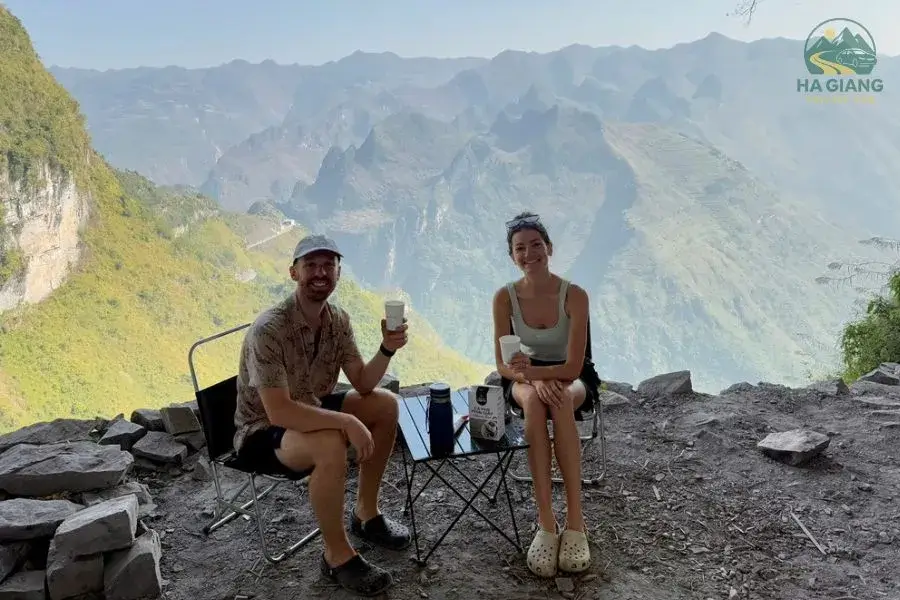
Adding that fourth day completely transforms the journey. Instead of rushing past landmarks to beat the dark, you have time to take the steep detour up to the Lung Cu Flag Tower on the Chinese border, enjoy a hot cup of coffee overlooking the Ma Pi Leng canyon, and take a boat ride through Tu San Canyon.
The Du Gia Advantage
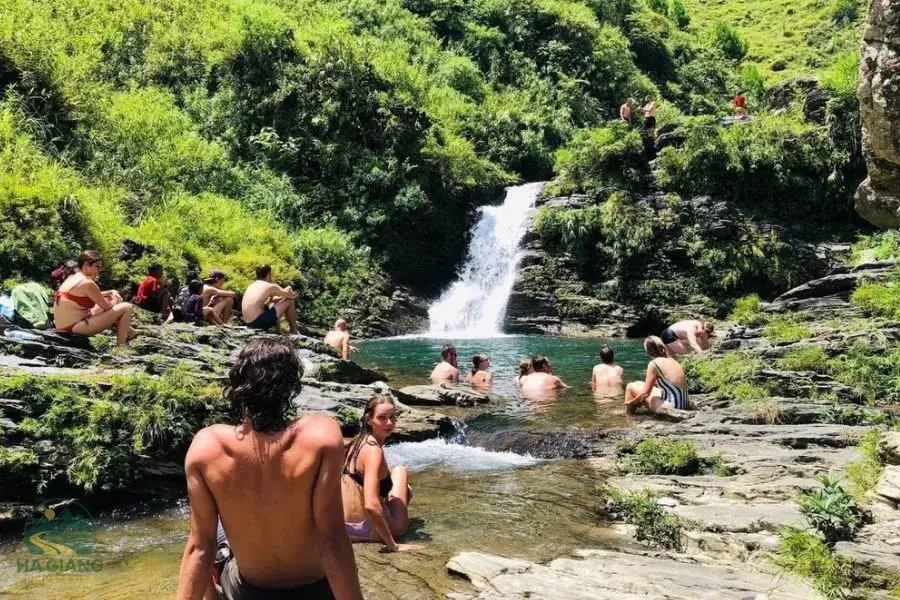
The inclusion of Du Gia is what makes the 4-day version superior. While Dong Van is dominated by harsh, majestic grey limestone karsts, Du Gia transitions into lush green valleys, terraced rice paddies, and refreshing natural springs where you can swim at the end of a long ride.
5 to 6-Day Deep Exploration
A 5- to 6-day itinerary offers a slow-travel experience. It’s best for photographers, hikers, and those who want to escape the main tourist trail.
Route Structure:
- Day 1: Ha Giang City → Thon Tha or Nam Dam Village (K’mung/Dao cultural stay)
- Day 2: Nam Dam → Quan Ba → Yen Minh → Lao Va Chai
- Day 3: Yen Minh → Dong Van (with an afternoon trek along the Sky Path)
- Day 4: Dong Van → Lung Cu Detour → Extreme North Border Villages → Meo Vac
- Day 5: Meo Vac → Mau Due → Du Gia Valley
- Day 6: Du Gia → Khau Vai (or local hidden viewpoints) → Ha Giang City
The Reality:
This timeframe unlocks a side of the northern frontier that weekend travelers never see. You can arrange overnight stays in traditional stilt houses, wake up early for sunrise photography above the clouds, visit authentic ethnic markets like the Meo Vac Sunday Market, and take day-long treks along the limestone ridges without watching the clock.
Mistakes That Can Ruin Your Journey
Avoiding these two critical traps can mean the difference between a trip of a lifetime and a stressful, high-risk ordeal on the road.
#1 Falling for the “2-Day Loop” Illusion
Many travelers with packed Vietnam itineraries try to squeeze the entire 350-kilometer circuit into 48 hours. While it is geographically possible to drive the asphalt loop in two days if you never stop, it transforms a breathtaking landscape into a stressful, high-risk endurance race.
Driving under intense physical fatigue on steep mountain switchbacks drastically increases the risk of accidents. If you genuinely only have two days, it is far wiser to explore just the gateway town of Quan Ba and the pine forests of Yen Minh rather than forcing the whole circuit.
#2 Over-Packing the Daily Viewpoint Checklist
Digital maps make destinations look incredibly close together, but a 15-kilometer stretch on the map can easily take an hour to navigate due to sharp elevations and oncoming truck traffic.
Trying to hit every single pinned cafe, cave, hidden waterfall, and viewpoint listed online creates a rushed schedule. This inevitably forces you to ride after dark. This is a highly dangerous practice given the absolute lack of streetlights and unpredictable livestock on the roads.
A better approach is to pick two or three primary anchors per day and let the rest of your time happen spontaneously.
FAQs
How much cash should I carry, and can I find ATMs on the loop?
While ATMs are available in major district centers like Quan Ba, Yen Minh, Dong Van, and Meo Vac, they frequently run out of cash or reject international cards. Small homestays, roadside gas stations, and local food stalls exclusively accept cash. It is highly recommended to finalize your travel budget for Ha Giang and withdraw sufficient Vietnamese Dong (VND) in Hanoi or Ha Giang City before starting the loop. Plan for roughly 500,000 to 800,000 VND per person per day for food, lodging, permits, and fuel.
Do I need a special permit to travel through Ha Giang?
Yes. Because Ha Giang shares a border with China, international travelers require a Border Area Permit issued by the Ha Giang Immigration Office. If you travel with an organized tour or a private car service, this is typically handled for you. If traveling independently, you can easily purchase it at the immigration office in Ha Giang City for 210,000 VND (around $9 USD) by showing your passport.
Is it safe to do the loop during the rainy season (June to September)?
It is possible. But it requires extreme caution, flexibility, and a slower pace. The summer months bring heavy downpours that can trigger flash floods and landslides, occasionally closing down key roads like the route through Mau Due or Du Gia. If you choose to travel during this time, keep your itinerary flexible, check daily local weather reports, and consider an experienced local driver rather than self-riding.
Final Thoughts
Deciding on your timeline isn’t just about counting days. It’s about choosing the kind of memories you want to carry home. The northern highlands are far more than a scenic background for a quick photo. They are a living, breathing landscape shaped by centuries-old ethnic traditions, winding mountain trails, and resilient communities. To truly appreciate this corner of Vietnam, you must give yourself permission to slow down and embrace the rhythm of the mountains.
If you want to experience the magic of the loop without the physical strain or stress of navigating treacherous mountain terrain, the Ha Giang Private Car team is here to help. We provide modern, well-maintained private vehicles paired with highly experienced local drivers who know every curve, viewpoint, and safe pass like the back of their hand.
Thank you for reading our guide. We wish you an unforgettable, safe, and deeply inspiring journey into the heart of Ha Giang! Safe travels, and see you on the road!