Introduction
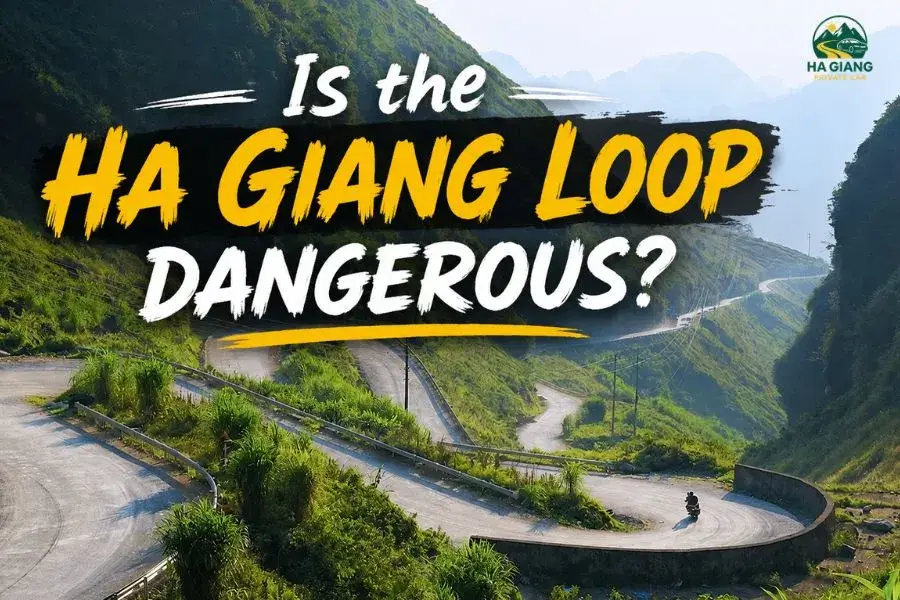
Is the Ha Giang Loop dangerous? The short answer is yes, it can be. However, the level of risk depends far less on the geography than on your riding experience, weather choices, and travel style. Every year, thousands of travelers complete northern Vietnam’s iconic circuit safely by preparing thoroughly, respecting mountain hazards, and knowing when to let a professional handle the handlebars.
The Ha Giang Loop is world-famous for its breathtaking limestone karsts, dramatic mountain passes like Ma Pi Leng, and vibrant ethnic hill-tribe culture. At the same time, it is notorious for winding switchbacks, loose gravel on blind corners, unpredictable mountain weather, and intimidating truck traffic.
Whether you are deciding between hiring an Easy Rider or self-riding, this guide cuts through the online dramatic hype. Below is an honest breakdown of the real hazards, current road conditions, license requirements, and practical tips to ensure your northern adventure is memorable for the right reasons.
Understanding the Real Risks on the Loop
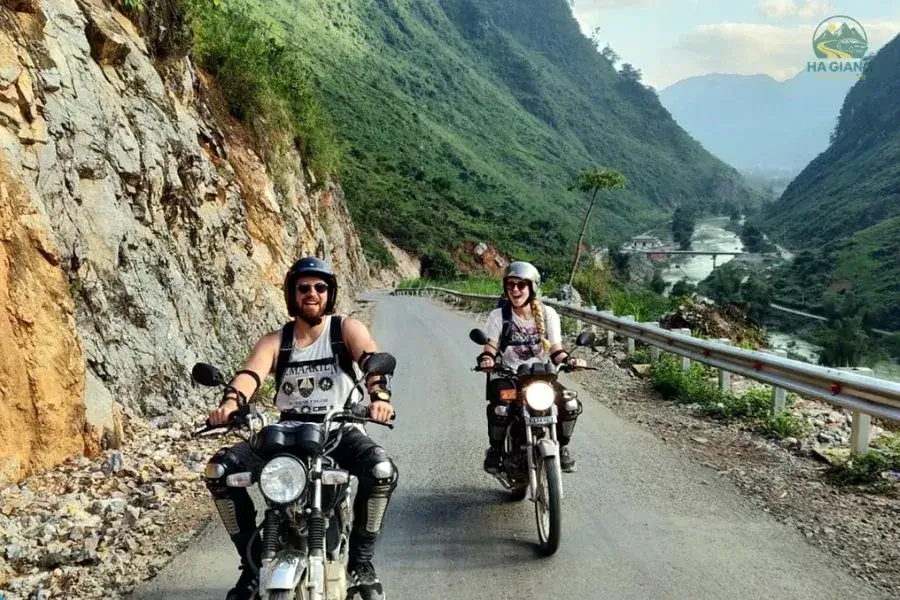
The route itself is not inherently reckless, provided it is traveled responsibly. Most accidents stem from human error, rapid weather shifts, or improper equipment rather than the road engineering itself.
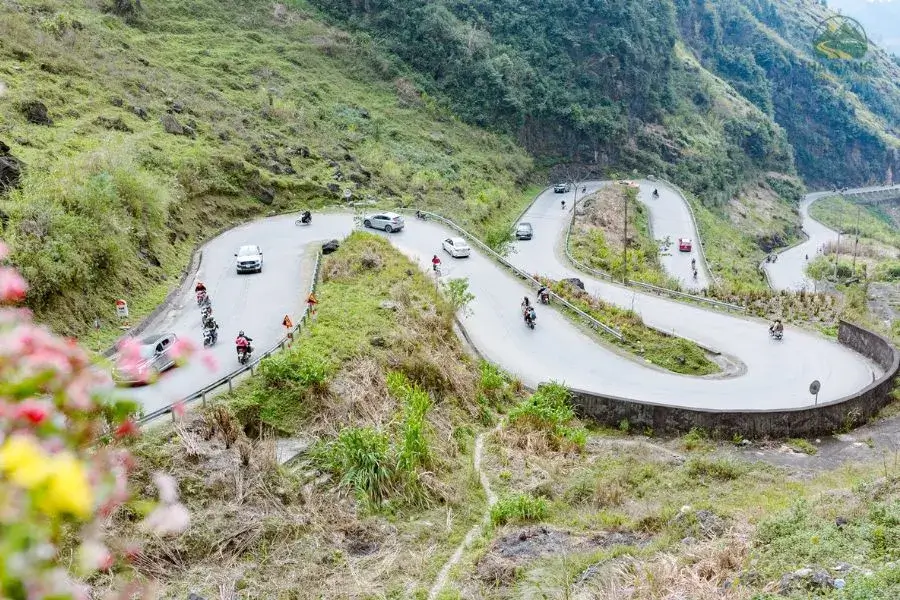
Unlike the chaotic scooter swarms of Hanoi or Ho Chi Minh City, traffic in Ha Giang province is relatively light. However, the terrain is unforgiving. Roads like the QL4C (the “Happiness Road”) are carved directly into steep limestone cliffs, featuring narrow lanes, sheer drop-offs, and continuous hairpin turns.
In recent years, local infrastructure has improved dramatically. Major stretches between Ha Giang City, Yen Minh, Dong Van, and Meo Vac are fully paved, though seasonal construction, mountain runoff, and landslide repairs remain ongoing realities in remote pockets.
| Risk Hazard | Threat Level | Who Is Most Affected? |
| Sharp Hairpin Bends | Medium | All drivers (especially on descents) |
| Heavy Rain & Flash Mud | High | Self-riders on two wheels |
| Mountain Fog & Cloud Cover | High | All motorbikes (notably around Dong Van) |
| Speeding / Overtaking | Critical | Inexperienced riders attempting risky passes |
| Landslides & Loose Rock | Medium-High | Travelers riding during monsoon months |
| Rider Fatigue & Cramps | Medium | Solo self-riders on long 5+ hour legs |
| Blind Corner Overtaking | Critical | Motorcyclists meeting heavy sleeper buses |
Why Does Ha Giang Have Such a Dangerous Reputation?
If you have spent time on social media, you have likely seen dramatic clips of motorbikes sliding on muddy passes or navigating narrow cliffside paths. While viral, these videos rarely paint an accurate picture of a standard journey.
The dangerous reputation typically stems from four main factors:
- Inexperienced Motorcyclists: A large percentage of international tourists attempt the Loop on a manual or semi-automatic motorbike despite having zero prior motorcycle experience. Skills picked up driving a light automatic scooter on flat coastal roads do not translate to steep mountain climbs and engine-assisted downhill braking.
- Complex Mountain Terrain: Crossing passes like Tham Ma Slope or Chin Sien Pass requires constant clutch, gear, and brake management alongside sharp spatial awareness for oncoming traffic.
- Rapid Microclimates: Weather in the northern highlands changes in minutes. A sunny morning near Quan Ba can turn into thick mist and torrential downpours by the time you reach Dong Van.
- Poor Rider Choices: Speeding, riding under the influence of local corn wine (Rượu Ngô) at evening homestays, ignoring weather warnings, or failing to review essential road safety information before departure account for the vast majority of severe incidents.
Is the Ha Giang Loop Dangerous for Beginners?
If you have never operated a clutch, shifted gears on a semi-automatic bike, or tackled mountain terrain, yes, self-riding the Ha Giang Loop is dangerous for beginners.
The Loop is not a training ground. A beginner attempting to learn motorcycle physics while navigating mountain roads faces immediate challenges:
- Stalling on steep uphill switchbacks with cars trailing close behind.
- Over-using front brakes on long downhill descents, causing brake pads to overheat and fail.
- Panic-braking on loose gravel, leading to immediate front-wheel slide-outs.
- Meeting wide sleeper buses or construction trucks on narrow, unlined blind bends.
BEGINNER TRAVEL DECISION MATRIX: Do you have a valid motorcycle license & frequent mountain riding experience?
✅ YES → Self-Riding Safe
❌ NO → Is a car preference or budget a factor? → Choose a private car for comfort or an Easy Rider Tour for less budget burden
Instead of asking if beginners can physically survive the drive, ask whether you will be relaxed enough to enjoy the stunning scenery. For most first-timers, booking an Easy Rider (a licensed, experienced local driver) is the smartest choice for both safety and peace of mind.
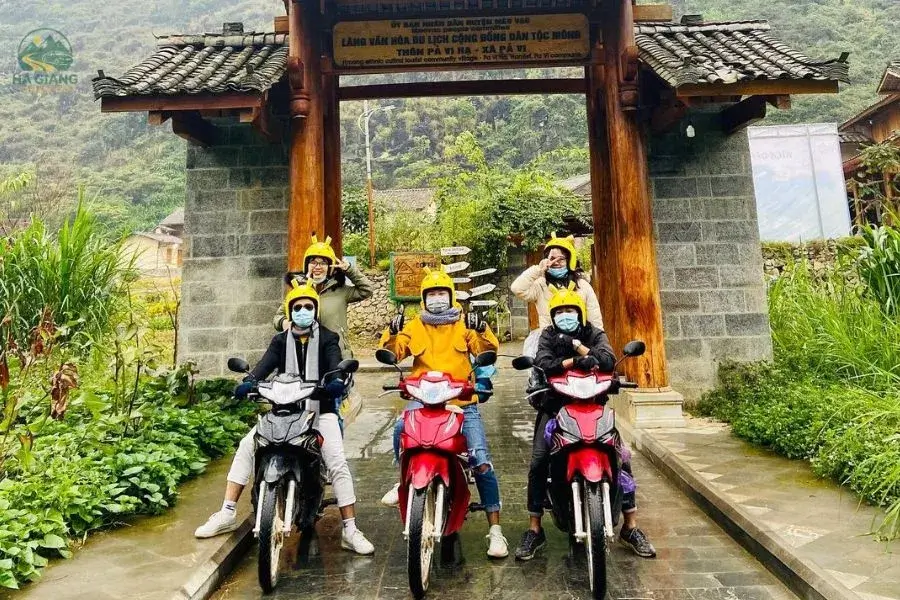
Travel Options Compared: Self-Ride vs. Easy Rider vs. Private Car
Choosing the right transport mode is the single most important safety decision you will make.
| Travel Option | Safety Level | Experience Required | Best Suited For |
| Self-Riding | Moderate | High (Gear/Clutch) | Licensed, experienced motorcycle riders |
| Easy Rider | High | None (As Passenger) | Solo travelers, beginners, culture seekers |
| Private Car | Very High | None | Families, older travelers, winter/rainy trips |
Self-Riding
Best for seasoned riders who hold an international motorcycle endorsement. It offers complete freedom over your itinerary but carries full personal liability for navigation, bike maintenance, and road hazards.
Easy Rider (Local Driver)
The most popular option for international tourists. You sit comfortably on the back of a robust bike driven by a local guide who knows every pothole, weather shift, and blind curve on the QL4C. It eliminates navigation stress while keeping the open-air mountain experience intact.
Private Car
An increasingly popular option, particularly during the wet or freezing winter months. A private 4×4 or car allows groups, families, and photographers to experience key highlights like Ma Pi Leng Pass and Du Gia in complete climate-controlled safety.
Check out Ha Giang To Meo Vac By Private Car or Ha Giang To Lo Lo Chai Village Private Car for safe trips with local drivers.
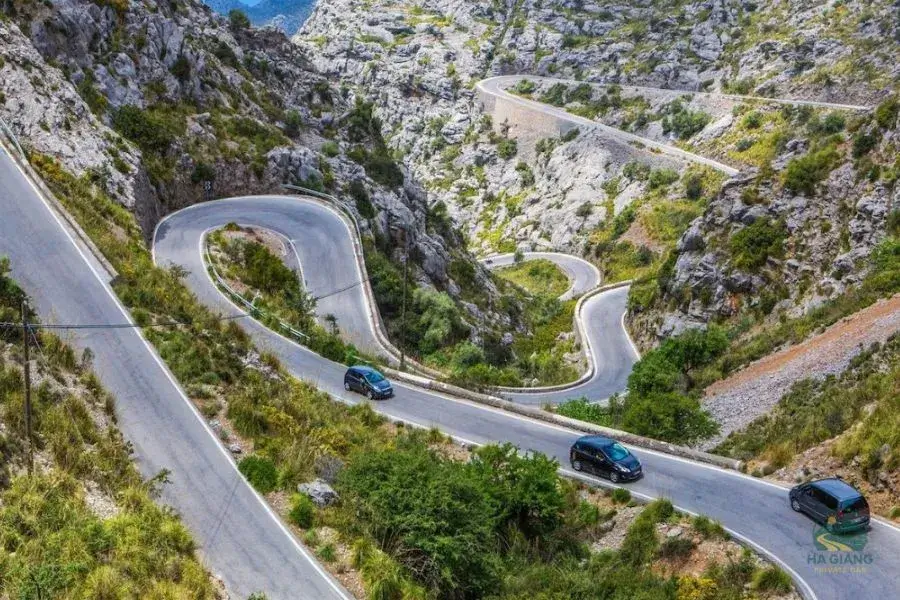
Real Road Conditions & Key Technical Hazards
Understanding real-time seasonal road conditions prevents surprises along the route. While main arteries like the QL4C and DT182 are paved, conditions shift based on local maintenance and weather:
- Smooth Asphalt vs. Loose Gravel: Newly paved highway sections can quickly turn into loose gravel patches near quarry zones or recent cliff clearings.
- Steep Gradients & Brake Fade: Long descents require driving in low gear (1st or 2nd on manual/semi-automatic bikes) to utilize engine braking. Riding the wheel brakes continuously cause them to glaze over and lose stopping power.
- Scooters vs. Semi-Automatics: Never take a fully automatic scooter (like a Honda Vision or Air Blade) onto the mountain passes. Their small wheels, weak engine braking, and lower clearance make them dangerous on steep descents. Rent a semi-automatic (Honda Wave/Blade 110cc) or a manual dual-sport bike (Honda XR 150cc).
Top 5 Road Hazards to Watch For
- Blind Corners & Overtaking Trucks: Horn tapping on blind bends is standard local etiquette. Always sound your horn before entering narrow mountain curves.
- Agricultural Livestock: Free-roaming water buffalo, goats, and cows frequently walk onto roads around ethnic villages beyond Yen Minh.
- Wet Road Markings: Painted white and yellow center lines become slick as ice when wet.
- Roadside Drainage Ditches: Deep concrete gutters border mountain roads; clipping one usually results in a severe crash.
- Rider Fatigue: High concentration levels over 4–6 hours of daily mountain driving cause mental exhaustion. Take breaks every hour at local coffee spots.
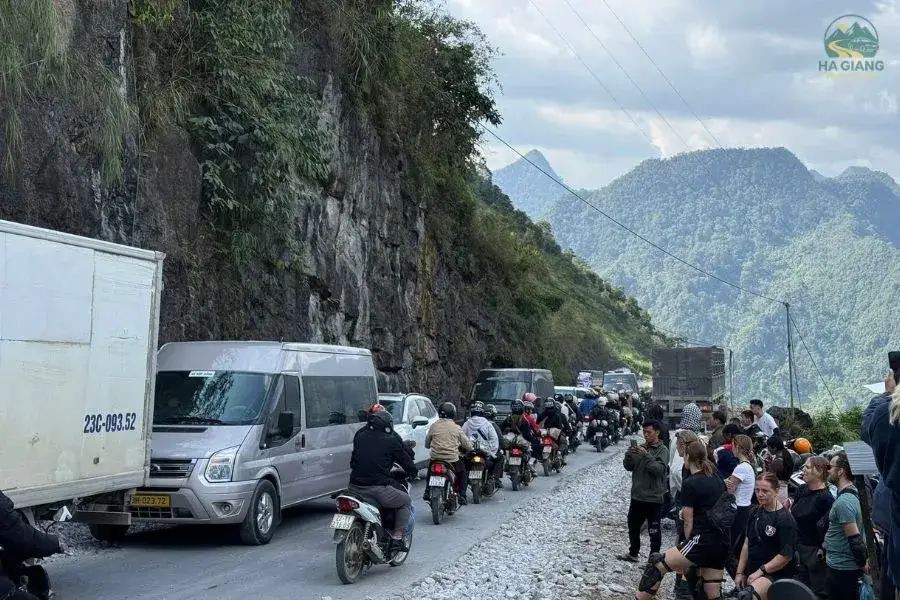
Navigating the Ha Giang Loop in the Rainy Season
Many travelers wonder if visiting during the rainy season (typically late May through September) is too dangerous. The answer depends on real-time weather monitoring and your willingness to adapt plans during heavy downpours.
Rain itself is manageable with quality waterproof gear, but heavy downpours create secondary hazards across the mountain passes:
- Landslides and Rockfalls: Torrential rain loosens clay and limestone on steep cliffside cuts, occasionally dropping rocks onto the road between Yen Minh and Dong Van.
- Thick Mountain Fog: High-altitude stretches near Quan Ba and Ma Pi Leng Pass can experience sudden cloud cover, reducing visibility down to a few meters.
- Flash Runoff and Mud: Rainwater carries mud and gravel across asphalt corners, dramatically reducing tire grip.
Rainy Season Riding Checklist
[✓] Waterproof dry-bags for all luggage
[✓] High-visibility raincoat or bright riding shell
[✓] Full-face helmet with clear (non-tinted) anti-fog visor
[✓] Tires with deep tread depth (checked before leaving Ha Giang City)
[✓] Flexible itinerary buffer days to wait out heavy storms
If heavy storms hit, the safest choice is to wait at a local homestay until the downpour passes and road crews clear any debris.
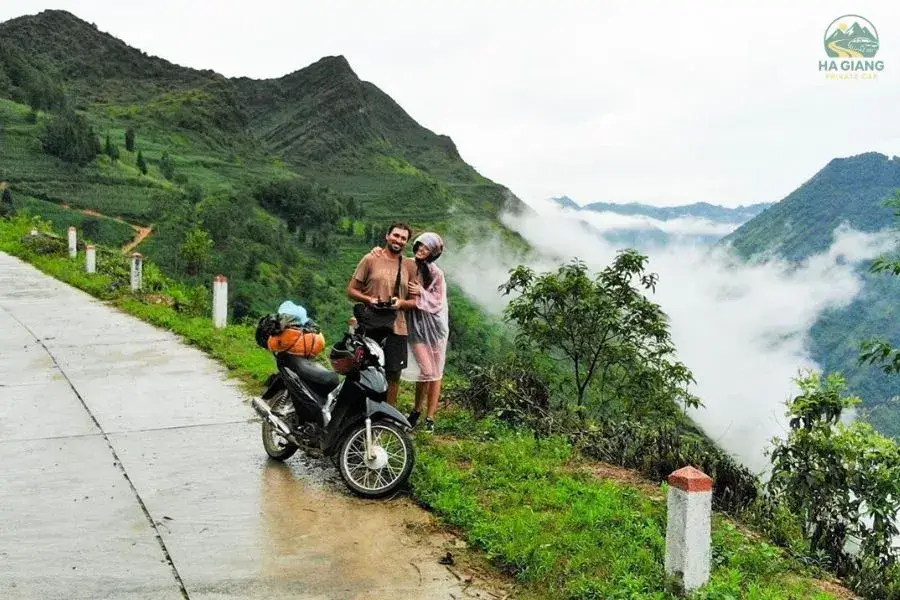
Police Checkpoints, Legal Laws, and Travel Insurance
Understanding local driving laws prevents unexpected fines and ensures you remain fully covered if an emergency occurs.
| Requirement | Official Status | Impact on Travel Insurance |
| Home Country Motorcycle License | Mandatory | Must show full heavy-motorbike endorsement, Class A/A2 |
| 1968 Convention IDP | Officially required in Vietnam | 1949 IDPs are NOT legally recognized |
| Local Police Checkpoints | Frequent outside Ha Giang City | Checking licenses and bike specs |
| Medical Travel Insurance Coverage | VOIDED automatically if riding without a legally recognized license | |
The 1968 IDP Reality
Vietnam is a signatory to the 1968 Convention on Road Traffic. It officially recognizes International Driving Permits issued under the 1968 convention that include a valid motorcycle stamp from your home country.
If you hold an IDP from a country that uses the 1949 Convention (such as the USA, Canada, or Australia), or if you only possess a standard automobile driver’s license, you are driving illegally under Vietnamese law.
How Legal Status Affects Insurance
This distinction is critical: most international travel insurance policies strictly mandate that you follow local laws. If you crash a self-ride motorbike without a 1968 IDP carrying a motorcycle endorsement, your insurer will likely deny all medical and damage claims. Review your policy’s license requirements carefully before choosing to ride solo.
Essential Safety Rules for Riding the Loop
Whether self-riding or riding pillion behind an Easy Rider, following fundamental mountain road etiquette keeps you safe:
- Invest in Proper Protective Gear: Ditch lightweight open-face shells. Wear a certified full-face or 3/4 helmet, riding gloves, covered boots, and durable trousers.
- Honk Before Blind Curves: Tapping your horn 2–3 times when approaching tight, obstructed mountain turns alerts oncoming trucks and buses to stay in their lane.
- Never Ride After Dark: Mountain roads lack streetlights, and cattle, unlit vehicles, or loose rocks become invisible after sunset. Plan your route to reach homestays by 5:00 PM.
- Avoid Alcohol During the Day: Save local corn wine (Rượu Ngô) for evening celebrations at your homestay. Never consume alcohol before or during riding legs.
- Ride Your Own Pace: When traveling in groups, never speed up to match a faster rider ahead. Focus on your own comfort zone, gear selection, and line through turns.
Common Mistakes That Cause Accidents
Most incidents on the Loop stem from preventable human error rather than mechanical failure:
- Inexperienced Gear shifting → Stalling on steep uphill switchbacks
- Overusing front brake → Locking front wheel on loose gravel
- Overtaking on blind corners → Meeting oncoming sleeper buses
- Riding automatic scooters → Loss of engine braking on steep descents
- Pushing through exhaustion → Slowed reaction times and misjudgments
Learning these hazards beforehand ensures you treat mountain passes with the respect they demand.
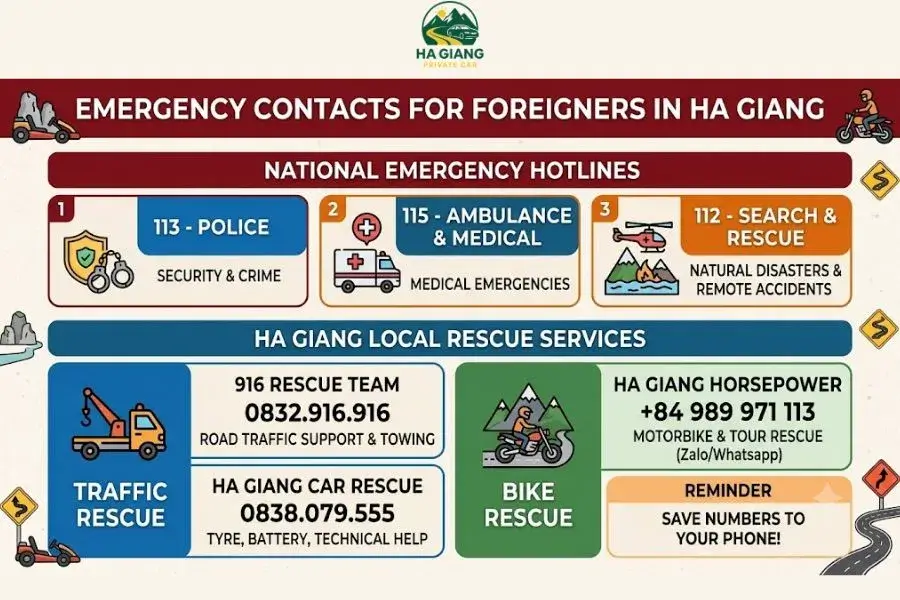
Emergency Preparedness Checklist
While serious incidents are rare for cautious travelers, proper preparation ensures quick responses to unexpected delays or minor breakdowns:
- Offline Maps: Download offline regional maps on your phone, as cellular coverage can drop in deep valleys between Meo Vac and Du Gia.
- First-Aid Basics: Carry antiseptic wipes, bandages, medical tape, and basic pain relief for minor scrapes.
- Cash Backup: Keep extra Vietnamese Dong (VND) on hand, as ATMs are scarce outside major towns like Dong Van and Yen Minh.
- Local Contacts: Save your rental agency’s phone number and hotel contact details for roadside assistance or mechanical help (Sửa Xe).
FAQs
Can I explore Ha Giang without riding a motorbike?
Yes. You can hire a private 4×4 car or join a small group car tour. This provides a comfortable, climate-controlled way to take in key sights, such as Ma Pi Leng Pass, Quan Ba Twin Mountains, and Dong Van Old Quarter, without touched handlebars or dealing with rain.
What is the safest month to do the Ha Giang Loop?
The autumn months of October to November and spring months of March to April generally offer the safest riding conditions. Temperatures are pleasant, rainfall is low, and roads are dry, offering clear visibility across mountain passes.
Are automatic scooters allowed on the Ha Giang Loop?
While not strictly illegal to rent, automatic scooters are strongly discouraged and unsafe for mountain passes. They lack engine braking, forcing you to rely entirely on mechanical brakes during long downhill descents, which causes brake fade and failure. Use a semi-automatic (like a Honda Wave) or a manual bike instead.
What happens if my bike breaks down in a remote area?
Roadside bike repair shops (Sửa Xe) are plentiful across Ha Giang province, even near small ethnic villages. Local residents are helpful and can usually assist with flat tires or minor chain fixes for a modest fee.
Final Thoughts
So, is the Ha Giang Loop dangerous? It presents genuine mountain hazards, but it is far from an unmanageable gamble.
When approached with realistic self-assessment, proper gear, respect for changing weather, and an appropriate travel style, the Ha Giang Loop is easily one of the most rewarding road trips in Southeast Asia. The dramatic limestone peaks, sweeping valleys, and genuine hospitality of local ethnic communities make it an unforgettable journey.
The key is matching your travel choice to your actual skill level rather than social media expectations. Prepare thoroughly, respect the mountains, and enjoy the ride of a lifetime.
Ha Giang Private Car wishes you safe travels and enjoyable Ha Giang journeys. Thanks for reading.