Introduction
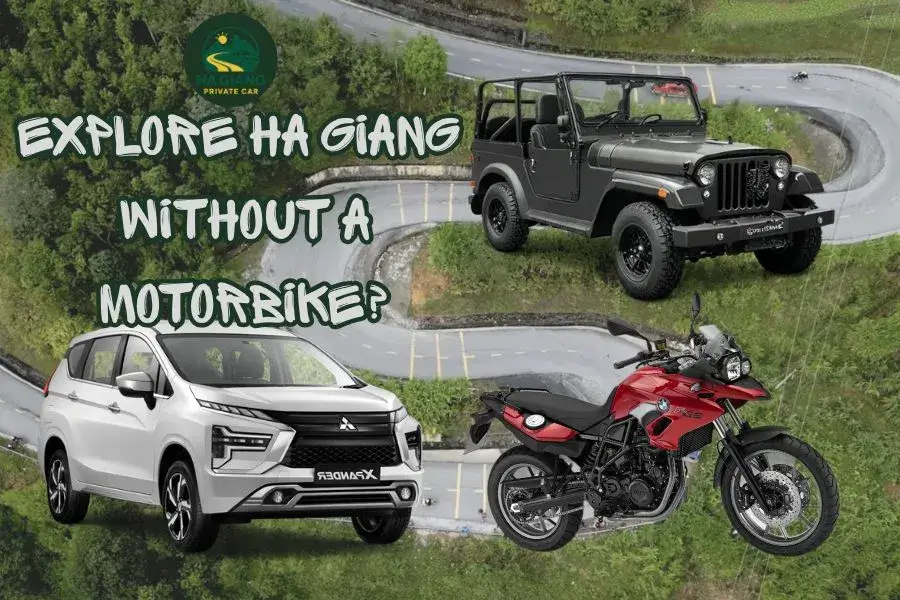
The quick answer is: Yes. Exploring Ha Giang without a motorbike is absolutely possible. For many travelers, it is actually the safer, more comfortable, and more rewarding way to experience northern Vietnam’s spectacular mountain landscapes.
Whether you choose a private car, an Easy Rider tour, a rugged jeep, or a guided road trip, you can still stand in awe at the edge of Ma Pi Leng Pass, wander the ancient streets of Dong Van, look out from Lung Cu Flag Tower, and cruise the emerald waters of the Nho Que River. All without ever touching a clutch.
For years, social media has painted the Ha Giang Loop as an exclusive club for two-wheeled daredevils. While navigating those hair-raising mountain switchbacks appeals to some, it is far from the only way to experience this UNESCO Global Geopark. Families traveling with children, couples, senior travelers, landscape photographers, and those who simply prefer a panoramic window over wind-burned eyes are increasingly choosing to explore Ha Giang without riding a motorbike.
In this local-insider guide, we will bust the myth of “motorcycles or bust,” compare the actual logistics of alternative transport, and dive into the legal, safety, and comfort realities of navigating Vietnam’s ultimate frontier on four wheels (or on the back of an expert’s bike).
Is Ha Giang Really Worth Visiting Without Riding?
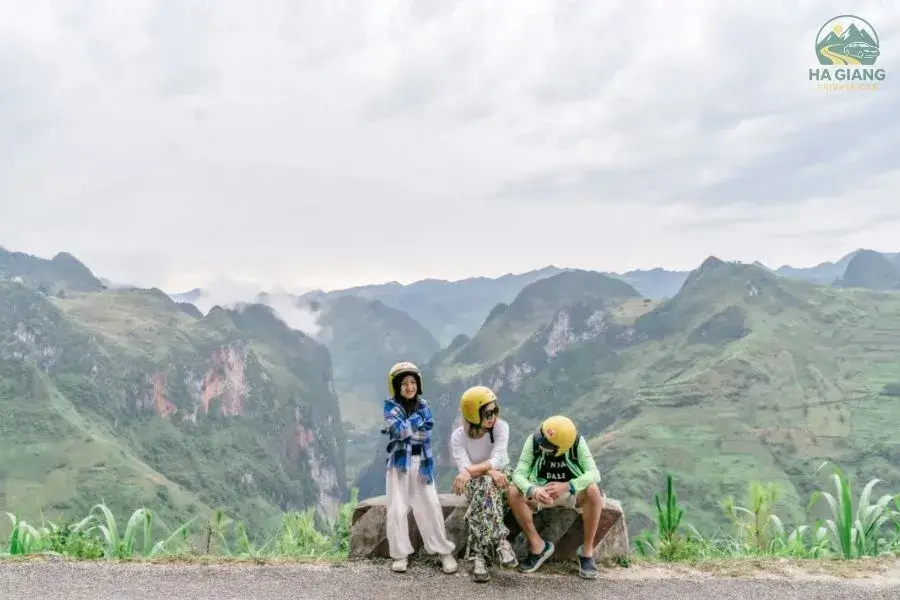
Absolutely. Let’s clear up a common misconception: the motorcycle itself is not the attraction, but the landscape is.
Arriving on two wheels or four, the sheer scale of the Dong Van Karst Plateau remains just as jaw-dropping. Traveling Ha Giang without a motorbike doesn’t mean sitting behind a tinted window missing the action. In fact, for most travelers, it actively enhances the experience.
Here is what the “non-rider” route actually gives you:
- Uninterrupted Sightseeing: Instead of white-knuckling your handlebars through sharp mountain bends, dodging gravel, and watching for oncoming utility trucks, you can actually keep your eyes on the limestone peaks.
- A Sanctuary from the Elements: Ha Giang’s weather is notoriously fickle. It can be a scorching 35℃ in the valleys, only to drop to a foggy, bone-chilling 10℃ with heavy mountain mist at the top of a pass. In a car, you simply roll up the window or adjust the AC.
- The Photographer’s Advantage: If you are carrying professional bodies, lenses, or drone gear, keeping them dry and dust-free on a motorcycle is a constant battle. A private vehicle serves as a secure, weatherproof locker.
- Unmatched Group and Family Flexibility: Children can nap between stops, older travelers avoid the intense physical fatigue of 6-hour daily rides, and your group can share the awe of the landscape in real-time conversations rather than shouting over engine noise.
The Legal Reality: Why Not Riding Is the Smartest Choice
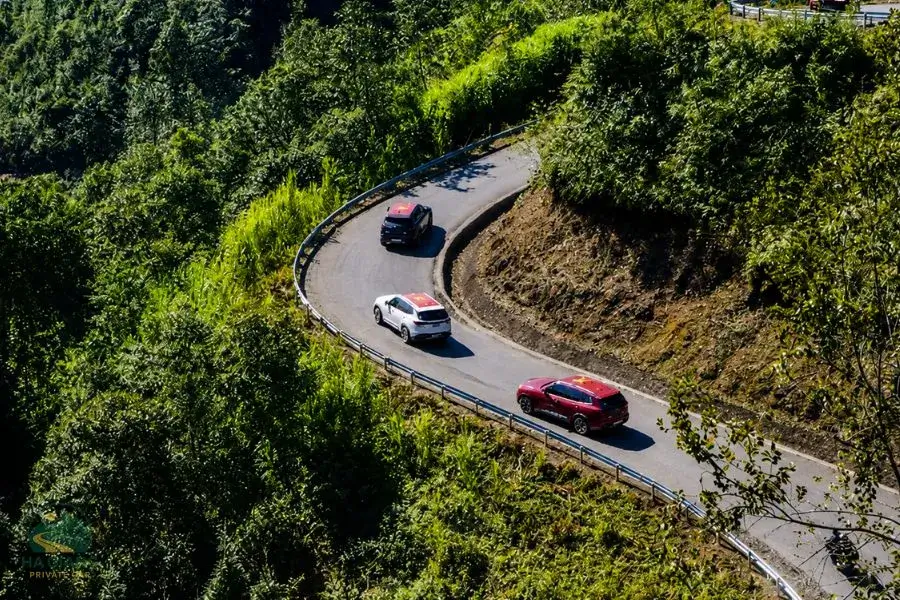
Before we look at the transport options, we need to address a critical update that many online guides gloss over: strict local police enforcement.
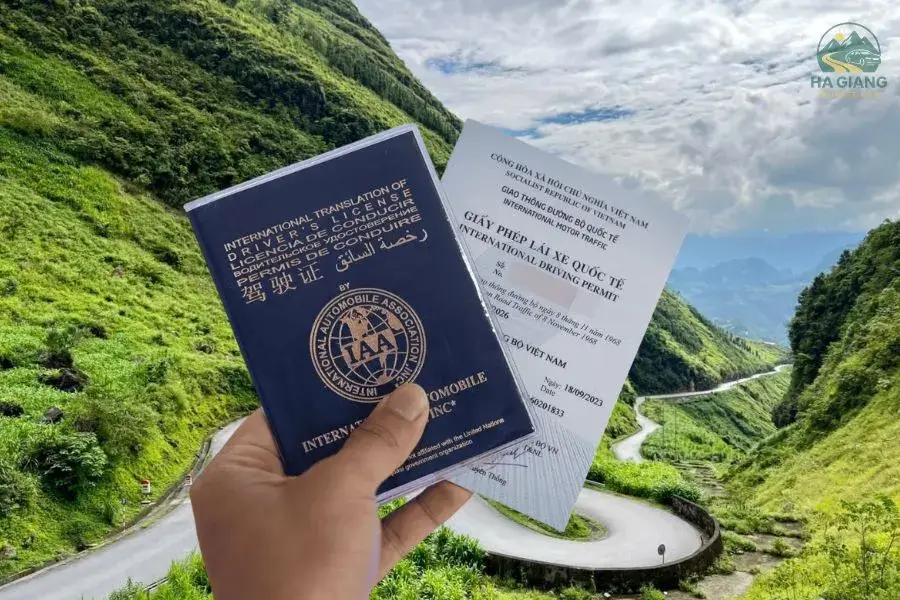
In Ha Giang, local authorities have heavily cracked down on licensing. To legally ride a motorcycle over 50cc in Vietnam, international travelers must possess:
- A motorcycle license from their home country.
- A valid International Driving Permit (IDP) that explicitly shows the motorcycle endorsement (Category A).
If you do not have both, your travel insurance is highly likely to be voided in the event of an accident. Furthermore, police checkpoints are common along the route out of Ha Giang City. Unlicensed riders face heavy fines, and rental shops risk having their bikes impounded.
Choosing to visit Ha Giang without a motorbike completely removes this legal anxiety, keeping your holiday stress-free and fully insured.
Best Ways to Explore Ha Giang Without a Motorbike
To find the best way to explore Ha Giang, you need to match your personal travel style, comfort requirements, and budget with the local transport options available. Here is how they stack up:
| Transportation Option | Best For | Comfort Level | Flexibility | Safety |
| Private Car with Driver | Families, seniors, photographers, small groups | Excellent | Maximum | Highest |
| Easy Rider Tour | Solo travelers, couples wanting adventure without driving | Moderate | High | High |
| Jeep Tour | Small groups, photography enthusiasts, open-air lovers | Very Good | High | Very High |
| Guided Minivan Tour | Solo budget travelers, social travelers | Good | Low (Fixed Route) | Highest |
Now let’s break down each option in detail.
Private Car with Driver
For those prioritizing comfort and bespoke travel, booking a private vehicle with an experienced local driver is unmatched.
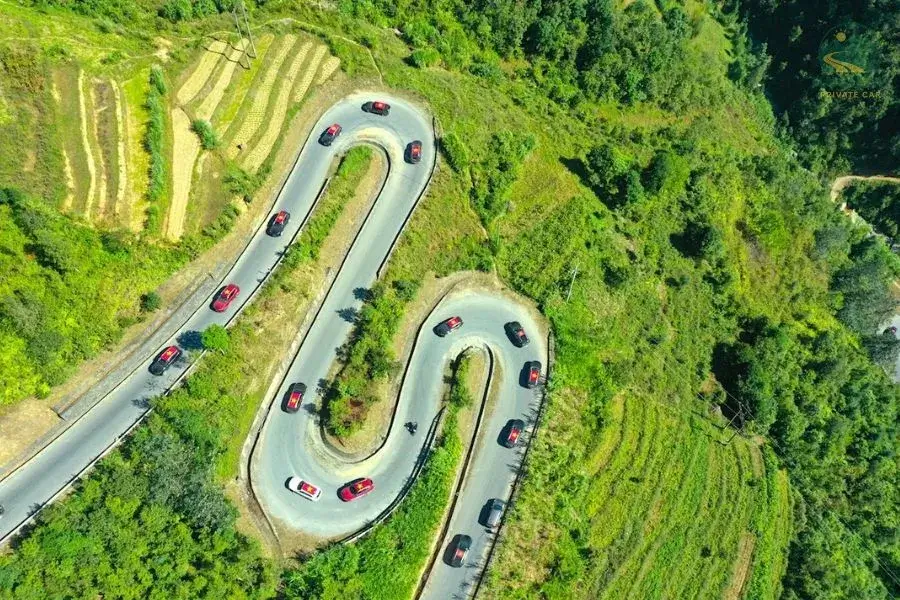
- Local Expert Tip: Do not book a standard compact sedan. The topography of Ha Giang demands high clearance. Always request an SUV (such as a Toyota Fortuner or Mitsubishi Xpander) or a spacious limousine van. The extra suspension and ground clearance make a massive difference on the winding, uneven mountain passes.
This option gives you complete control. If you spot a mist-shrouded valley or a roadside Hmong market, you simply ask your driver to pull over. It also makes managing your luggage seamless. You don’t have to leave your main suitcases behind in Ha Giang City and survive out of a tiny backpack for four days.
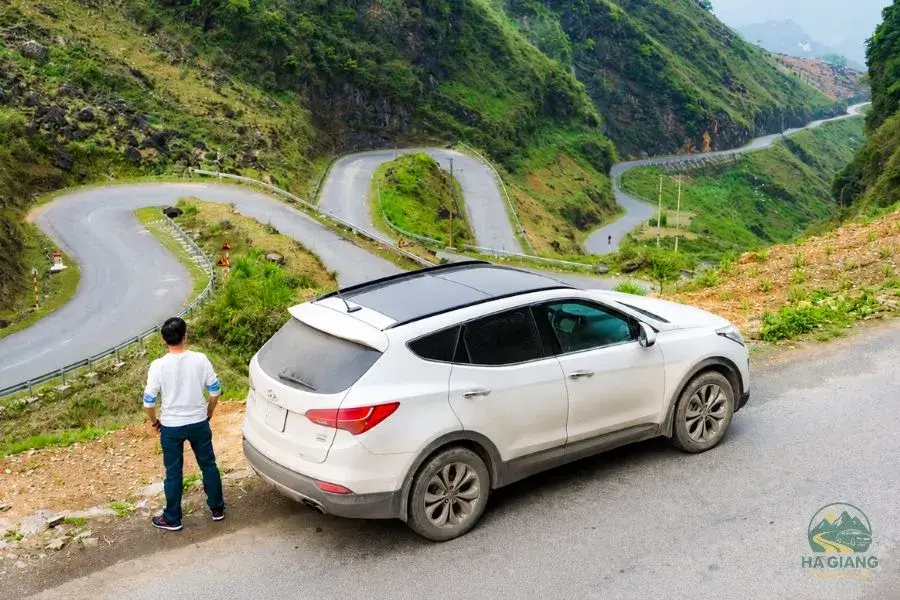
If you are currently mapping out your broader northern itinerary, arranging a private car also makes it incredibly easy to coordinate your overall transport in Ha Giang with onward connections.
Review our Ha Giang car rental services, such as Ha Giang to Lo Lo Chai Village or Ha Giang to Meo Vac by private car, if you need them for your trip.
Easy Rider Tours
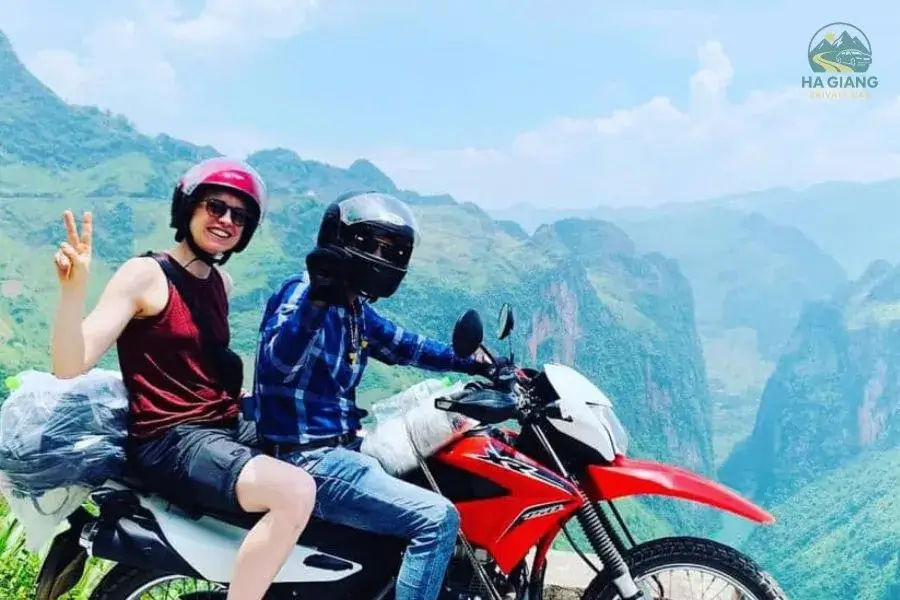
If you still want the visceral, wind-in-your-face thrill of the loop but lack the licensing or confidence to drive, an Easy Rider tour is the perfect middle ground. You ride as a passenger on the back of a motorcycle operated by a licensed, highly experienced local guide.
These guides are essentially mobile cultural ambassadors. Because they speak the local languages and know every hidden trail, they can introduce you to authentic Hmong, Tay, and Dao villages, roadside food stalls, and stunning photography viewpoints that self-drive tourists routinely miss.
- The Trade-off: It is still physically demanding. Sitting on the back of a bike for several hours a day can be tough on your back and knees, and you are fully exposed to sudden mountain downpours.
Jeep Tours
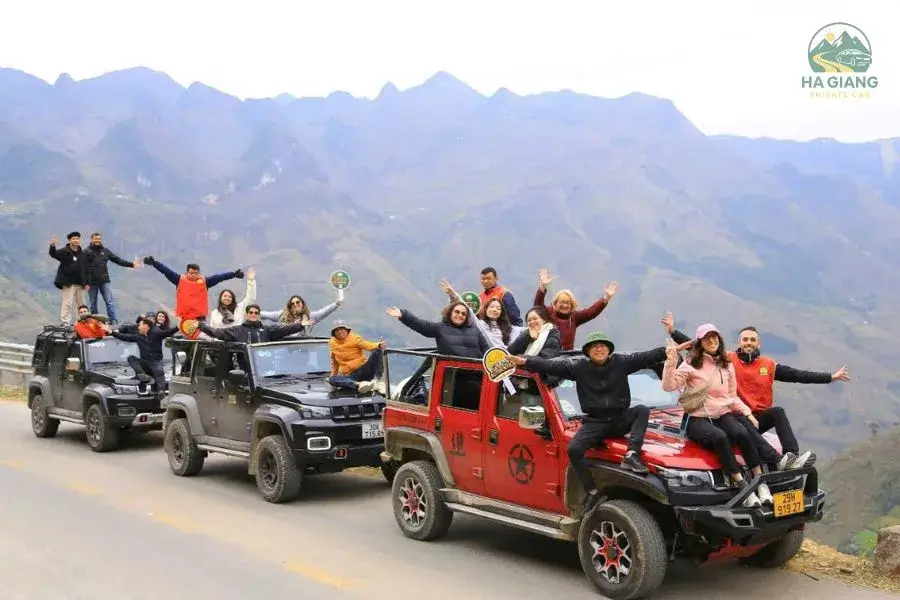
Jeep tours are a rapidly growing trend in Ha Giang, offering an adventurous compromise between a closed car and an exposed motorcycle.
Traveling in a classic open-top or modified 4×4 jeep gives you a wide, unobstructed field of view for photography while keeping you protected by a sturdy steel roll cage. It is highly social, incredibly photogenic, and handles the steep gradients of the Dong Van Karst Plateau with ease.
Planning Your Route to the Loop
Before you can begin the scenic loop, you must first reach Ha Giang City. Most travelers make the mistake of leaving this planning to the last minute.
Depending on your starting point in Vietnam, here are the most seamless pathways to transition to your mountain adventure:
- From the Capital: If you are starting in Hanoi, you should evaluate the best Hanoi transfer options, which typically range from convenient overnight cabin sleeper buses to private luxury limousine vans that bring you directly to your Ha Giang hotel.
- From the Mist to the Mountains: If you are coming from the terraced rice paddies of Lao Cai province, booking direct travel from Sapa via local shared vans is the most efficient cross-mountain route.
- From the Karst to the Canyons: If you are wrapping up an itinerary in Ninh Binh, coordinating direct travel from Ninh Binh via overnight sleeper buses will save you a day of backtracking through Hanoi, dropping you off refreshed and ready to begin the loop.
For a deeper dive into how these transport modes compare on price, routes, and travel times, check out our comprehensive travel comparison guide before finalizing your bookings.
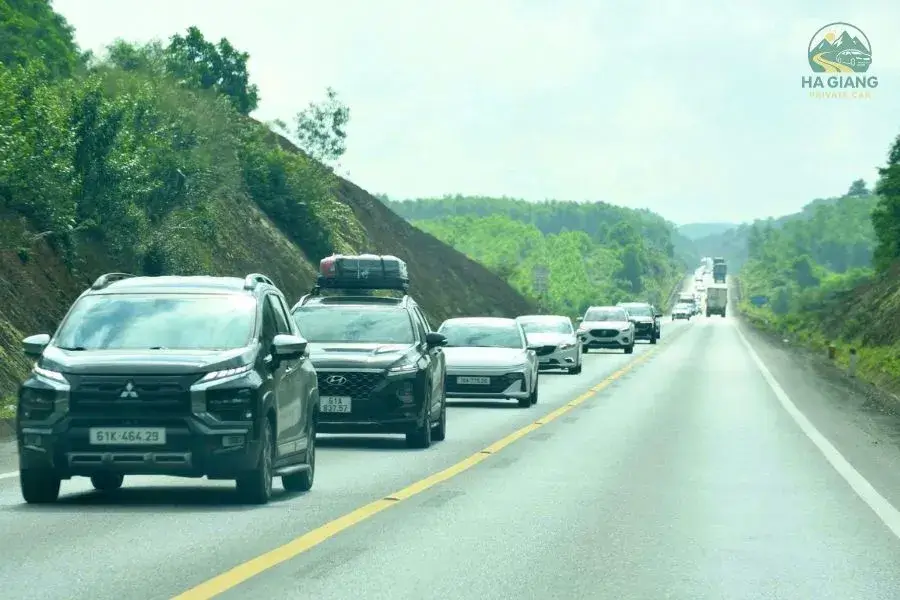
The Realistic 4-Day No-Rider Itinerary
Most standard 3-day itineraries push vehicles too fast over grueling mountain switchbacks, leaving you with little time to actually step out and enjoy the destinations. This 4-day route offers the perfect balance of sightseeing, safety, and physical comfort.
Day 1: Ha Giang City to Yen Minh (via Quan Ba)
- Distance: ~110 km
- Driving Time: ~4 hours (excluding stops)
- The Route: Head north along the QL4C (The Happiness Road).
Your driver will navigate the steep, winding sweeps of the Bac Sum Pass and climb toward Quan Ba Heaven’s Gate. Stop here for a quick coffee and a panoramic view of the iconic Twin Mountains.
- Local Expert Tip: Skip the standard lunch spots in the busy town of Tam Son. Instead, ask your driver to take a minor detour to Nam Dam, a peaceful village home to the clay-walled houses of the Dao ethnic minority. It is the perfect place for a quiet, home-cooked lunch.
Finish your afternoon driving through the towering limestone canyon carved by the Mien River before settling into your accommodation in Yen Minh.
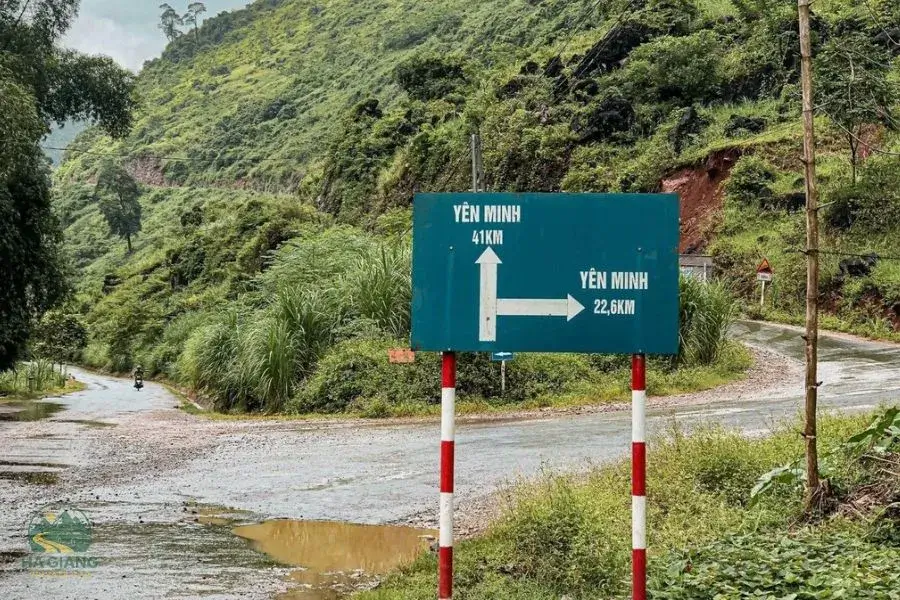
Day 2: Yen Minh to Lo Lo Chai Village
- Distance: ~85 km
- Driving Time: ~3 hours
- The Route: Deep into the heart of the UNESCO Global Geopark.
Start early to tackle the legendary Doc Tham Ma (Tham Ma Pass), the iconic S-curve road that you have likely seen in every travel video. Because you are not driving, you can capture stunning photos from the safety of the upper viewing platform.
Next, stop at the historical Hmong King’s Palace (Dinh Vua Meo) in Sà Phìn, which showcases a unique blend of traditional Hmong, Chinese, and French colonial architecture.
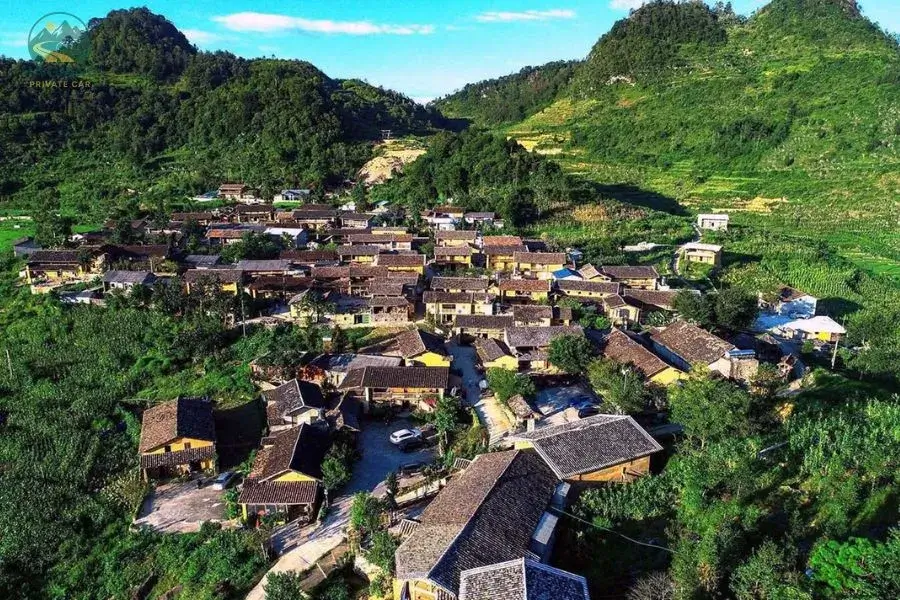
Instead of staying in the busy hub of Dong Van town, have your driver take you further north to Lo Lo Chai, a colorful fairy-tale village nestled directly at the foot of the Lung Cu Flag Tower.
- Local Expert Tip: Spend the evening at a homestay in Lo Lo Chai. The clay houses, flower-lined pathways, and quiet mountain atmosphere offer an incredibly cozy local experience compared to standard town hotels.
Day 3: Lo Lo Chai to Meo Vac (via Ma Pi Leng Pass)
- Distance: ~50 km
- Driving Time: ~2 hours (but expect a full day of activities)
- The Route: The most dramatic scenery in Southeast Asia.
Start your morning by climbing the Lung Cu Flag Tower to gaze across the northernmost border into China. From there, head south to tackle the crown jewel of the loop: the Ma Pi Leng Pass.
Navigating the Nho Que River Boat Trip:
The emerald-green Nho Que River flows through the deepest canyon in Southeast Asia (Tu San Canyon). However, many guides omit a critical logistical detail for non-riders: cars cannot drive down to the boat pier.
- Your private car or jeep must park at the designated lot high above the canyon.
- To reach the boat launch, you must either hike down a very steep, strenuous walking path or hire a licensed, local motorcycle taxi (Xe Ôm) to shuttle you down the switchbacks.
Local Expert Tip on Nho Que River Access: The motorbike taxi shuttle from the parking lot down to the riverbank costs roughly 100,000 VND ($4 USD) round-trip per person. Make sure to carry cash for this, as the local riders do not accept card payments.
- If you are traveling with seniors or young children, coordinate with your driver to choose the safest entrance point (the Ta Lang side is typically preferred for vehicle-assisted transfers).
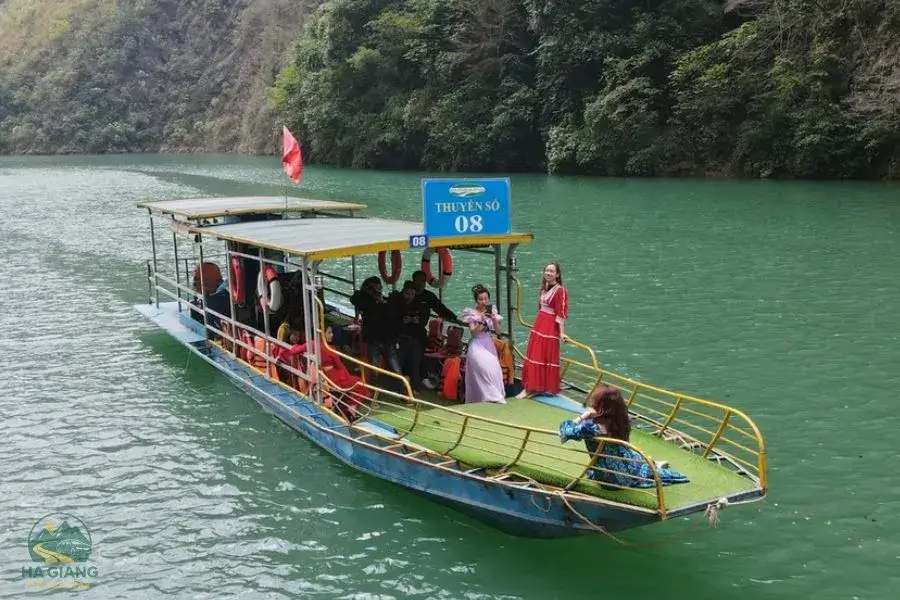
After your boat cruise, spend the night in Meo Vac.
Day 4: Meo Vac to Ha Giang City
- Distance: ~145 km (via Mau Due & Yen Minh)
- Driving Time: ~5.5 hours
Crucial Road Warning (2026 Update): Many outdated itineraries advise taking the southern leg of the loop back to Ha Giang City via the Du Gia mountain route. While gorgeous, the DT176 and DT181 roads around Du Gia are notorious for intense construction, deep gravel, potholes, and landslides during rainy days.
If you are traveling in a standard sedan, or if it has rained recently, avoid the Du Gia route completely. Instead, have your driver take the much safer, fully paved, and smoother northern highway back through Mau Due and Yen Minh. It adds a few kilometers, but it protects your spine, your vehicle, and your peace of mind.
How Much Does It Cost to Explore Ha Giang Without a Motorbike?
The cost of exploring the Ha Giang loop without a motorbike depends on your group size and style. Because cars and jeeps can divide costs among passengers, they are often surprisingly economical.
- Private SUV (Toyota Fortuner/Mitsubishi Xpander) with Driver: $350 – $480 USD (8.5M – 12M VND) for a 4-day private rental, including fuel, driver meals, and accommodation. Divided by 4 travelers, this is only ~$100 USD per person.
- Easy Rider Tour (All-Inclusive): $180 – $220 USD (4.5M – 5.5M VND) per person for a 4-day package, including the motorcycle, driver, entry fees, meals, and homestays.
- Vintage Jeep Tour: $750 – $950 USD (18M – 23M VND) per group for a 4-day customized private tour. Excellent for groups of 3-4 looking for high-end photography opportunities.
Pros & Cons of the No-Motorbike Route
Like any travel style, four-wheeled exploration of the highlands comes with its own set of trade-offs.
The Advantages
- Safety & Compliance: Bypasses local police checkpoints, license complications, and insurance voids.
- Climate Comfort: Complete insulation against dust, heavy mountain rain, and unexpected winter wind chills.
- Zero Driving Fatigue: You arrive at your homestay ready to explore on foot, rather than collapse from muscle soreness.
The Disadvantages
- Minor Trail Access Restrictions: Cars cannot navigate a small handful of narrow dirt paths, such as the direct route to the very top of the “Ma Pi Leng Skywalk”.
- Higher Upfront Costs: Solo travelers will pay significantly more for a private car compared to a basic motorbike rental.
FAQs
Do I need a special border permit if I travel by car?
Yes. All foreigners visiting the border districts of Ha Giang (Dong Van, Meo Vac, Yen Minh) must obtain a Foreigner’s Border Permit. Your driver or tour operator will typically collect your passport details and secure this permit for you at the Ha Giang Immigration Office for about $10 USD (250,000 VND).
What do I do with my large suitcases?
If you choose a private car, your suitcases travel safely in the trunk. If you choose an Easy Rider tour, your main luggage can be stored for free at your hostel or rental agency in Ha Giang City. You will simply pack a 20L-30L dry bag with 4 days of essentials to strap onto the back of your guide’s motorcycle.
Is the loop prone to motion sickness?
Yes, absolutely. The road consists of non-stop sharp turns, rapid altitude drops, and steep ascents. If you are prone to motion sickness, sit in the front seat of your private vehicle, request that your driver takes the curves slowly, and pack motion sickness medicine (easily purchased at any pharmacy in Hanoi or Ha Giang City).
Final Thoughts
Choosing to explore Ha Giang without a motorbike is not a compromise. It is a conscious, smart choice to enjoy one of the world’s most spectacular landscapes with your eyes wide open, your legal bases covered, and your camera fully charged.
Take your time, trust a professional local driver, and let the real magic of Northern Vietnam unfold comfortably right outside your window.
Safe travels, and may your journey through the Happiness Road be filled with clear skies and unforgettable mountain views! Thanks for reading our Ha Giang Private Car team’s travel blog.